


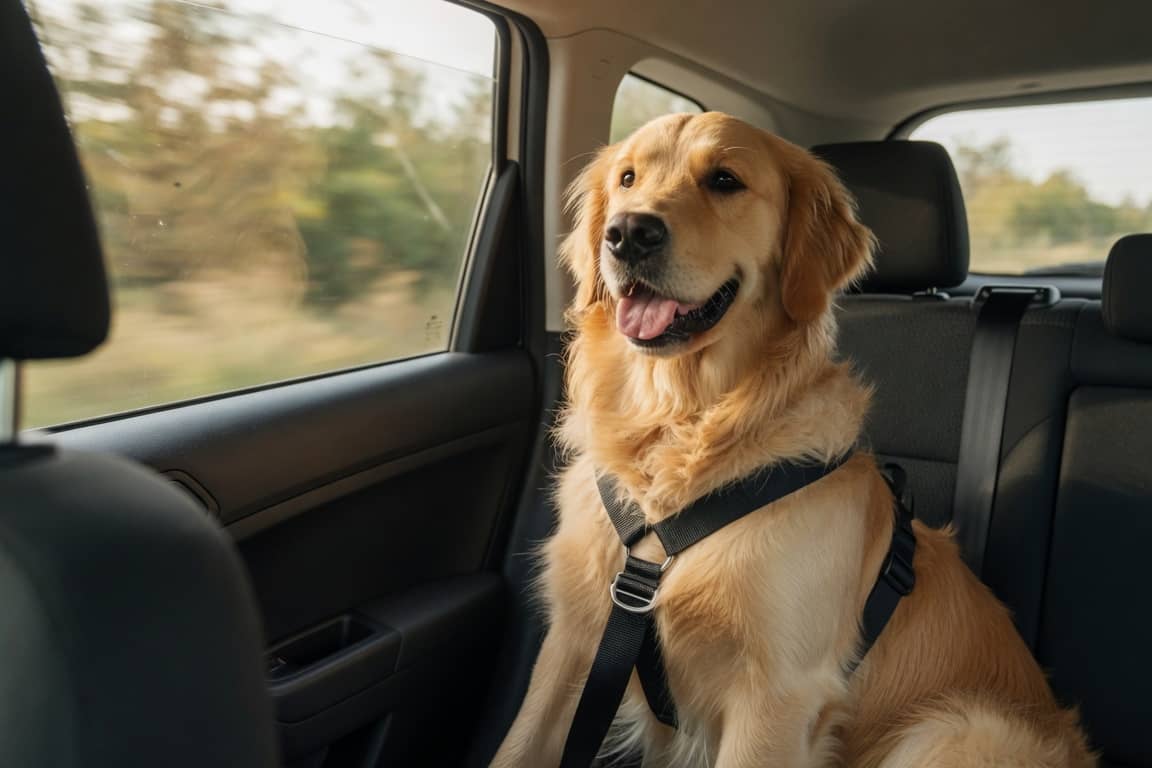
Prepare Your Dog for a Road Trip: 8 Essential Tips First-Time Dog Road Trip
First-Time Dog Road Trip? You’ve double-checked the route, packed the snacks, and now you’re standing in the driveway staring at the car. Your dog is bouncing around with excitement, but your stomach is tight. This isn’t a quick trip to the park — it’s a real road trip, four hours or more, and you keep picturing every possible thing that could go wrong. Will your dog get carsick? Panic in the crate? Need to go at the worst possible moment?
You’re not alone in that worry. Plenty of dog owners put off longer drives because they’re unsure how to keep their pet comfortable and safe the whole way. This guide walks you through how to prepare your dog for a road trip using the same approach that’s worked for my own dogs over years of cross-country moves and weekend adventures. We’ll cover timing, health basics, the right gear, training that actually sticks, what to pack, feeding and stopping rhythms, keeping everyone calm, common pitfalls, and what to do when plans change. By the end you’ll feel ready instead of rattled. First-Time Dog Road Trip
How Far in Advance Should You Start Preparing Your First-Time Dog for a Road Trip?
Start the real preparation two to four weeks out if this is your dog’s first long journey. That window gives you time to handle vet needs, test new gear, and run practice drives without cramming everything into the final days.
Four weeks ahead, map your route and note any overnight stops so you can confirm pet policies. Schedule the vet appointment for the following week. Begin introducing the crate or harness in short, positive sessions. Three weeks out, take your dog on two or three progressively longer practice drives — twenty minutes, then forty, then an hour — always ending with praise and a favorite walk.
One week before departure, buy or confirm any missing items on your list and do a full test run of the restraint system. Pack the non-perishables so you’re not rushing the night before. The day before you leave, give your dog a solid walk or play session to burn off energy, feed a normal but not oversized meal in the evening, and get yourself to bed early. Rushing around stressed the morning of the trip rubs off on your dog fast.
Vet Check-Up and Health Essentials Before You Leave
Book a vet visit ten to fourteen days before you go. Bring up the upcoming trip specifically and ask about motion sickness options if your dog has ever drooled or vomited on shorter rides. Request printed copies of the rabies certificate and vaccination records — many emergency clinics and boarding facilities want to see them on the spot.
Confirm the microchip is registered with current contact information and that the collar ID tag shows your cell number plus a backup person who knows you’re traveling. If your dog takes daily medication, ask the vet for an extra prescription or enough refills to cover delays. This is also the time to discuss any anxiety or arthritis supplements you might trial on short drives first.
If your veterinarian asks whether this is your dog’s first road trip, be honest. If it is, simply say, “Yes, this is my dog’s first road trip.” That information helps your vet give advice that’s appropriate for a first-time travel experience.
American Veterinary Medical Association (AVMA) — Traveling with Your Pet
Choosing the Right Crate, Carrier, or Safety Harness to Prepare Your Dog for a Road Trip
A loose dog in a moving vehicle is one of the fastest ways a pleasant trip turns dangerous. Even a well-behaved dog can become a projectile in a sudden stop or swerve, and an unrestrained dog can easily slip out an open door at a rest area.
Crash-tested harnesses that clip directly into the seatbelt system work well for many dogs who prefer to sit up and look around. Choose one sized correctly so the dog can lie down comfortably but cannot reach the front seats. For dogs who settle better with walls around them, a sturdy crate anchored to cargo tie-downs or seatbelt loops is often the safer choice. Make sure the crate is large enough for the dog to stand, turn, and lie down naturally, and always secure it so it cannot slide or tip.
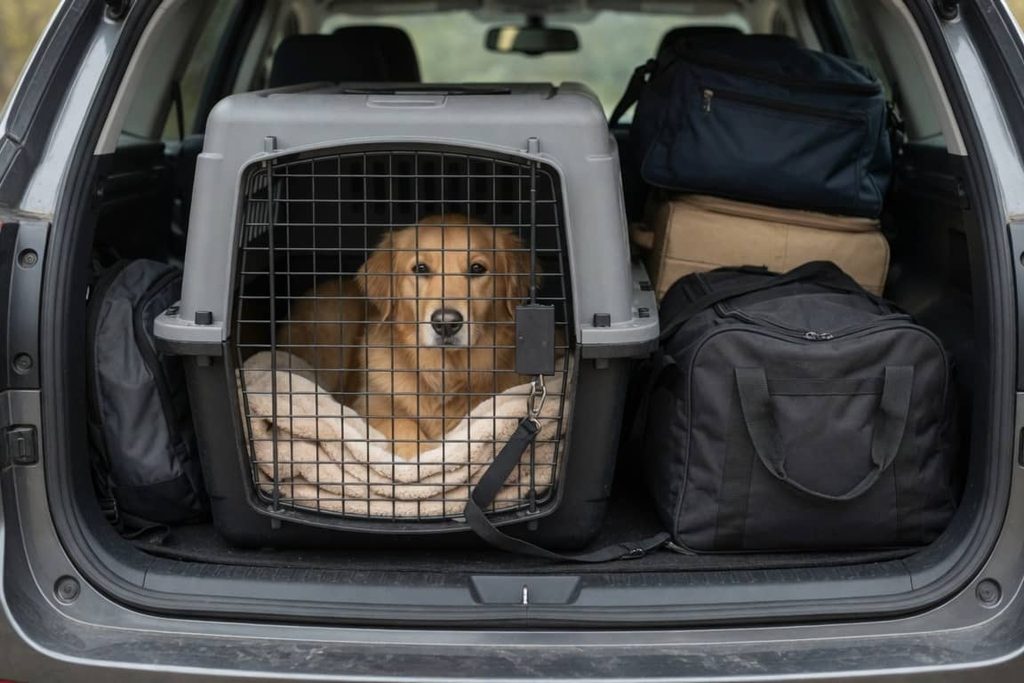
Pet barriers across the cargo area of an SUV can work if your dog is already reliable in the back, but they still need a harness or tether so they cannot launch forward in a crash. Whichever option you pick, test it on a drive around the block before the real trip. If anything feels loose or uncomfortable, adjust or switch it now.
Center for Pet Safety — Crash Test Certified Products for First-Time Dog Road Trip
Crate and Car Training to Prepare Your Dog for a First-Time Dog Road Trip
If your dog only rides in the car for short errands, treat the long trip like a skill that needs practice. Begin crate or harness work while the car is parked in the driveway. Feed meals inside the crate or while wearing the harness for several days so the association stays positive.
Next, sit in the parked car together with the engine running for five or ten minutes, handing out treats and calm praise. Only then move to actual short drives. If your dog whines, paces, or shows stress within the first ten to fifteen minutes, pull over safely, take a short walk, and end the session on a good note rather than pushing through. Forcing longer sessions early can teach your dog that car rides equal misery.
Build gradually over a couple of weekends: twenty-minute loops, then forty-five minutes, then a full hour with a rest stop in the middle. By the time the big trip arrives, the car feels routine instead of overwhelming.
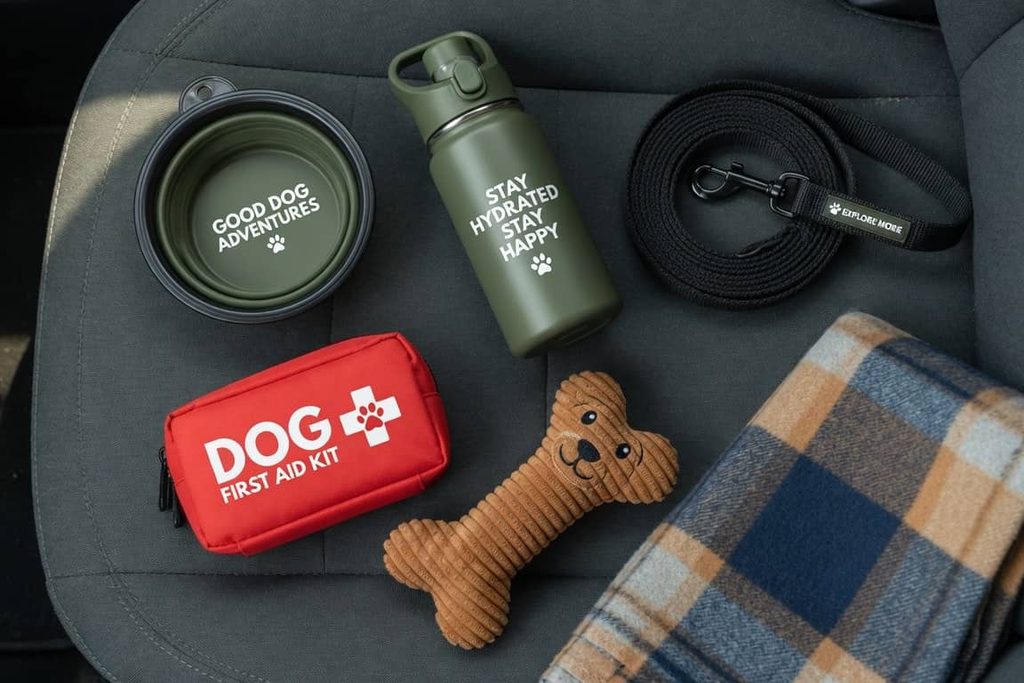
What to Pack: The Ultimate Road Trip Checklist for Dogs
Pack with the same care you’d use for a human family member. Here’s what actually earns its place in the car:
- Pre-portioned food in zip bags or the original bag plus one extra day’s worth in case you’re delayed.
- Several bottles or a jug of water plus a collapsible, non-spill bowl.
- The travel harness or crate you’ve already tested, plus a backup flat collar and leash.
- At least two rolls of waste bags and a small roll of paper towels plus enzyme cleaner for accidents.
- A simple first-aid kit: vet wrap, antiseptic wipes, gauze, tweezers, blunt scissors, instant cold pack, and any regular medications in original labeled containers.
- A printed copy of vaccination records and microchip details in a waterproof folder or zip bag.
- One familiar blanket or old t-shirt that carries your scent, plus one quiet chew toy reserved only for the car.
- A long line (20–30 feet) clipped to a secure anchor at rest stops so your dog can stretch and sniff without bolting.
- A few high-value treats kept in your pocket or center console for calm behavior at stops.
- A small trash bag dedicated to dog waste so you’re not hunting for a bin every time.
Keep the everyday leash and a spare in the front seat where you can reach it quickly.
Feeding and Hydration Rules for Travel Days
Feed a normal but slightly lighter meal two to three hours before departure so your dog has time to digest without a full stomach sloshing around curves. Skip the big breakfast on travel morning if your dog tends toward carsickness.
During the drive, offer water in small amounts at every stop after your dog has walked and pottied. Gulping large quantities on an empty or nervous stomach can trigger nausea. If the weather is hot, freeze a couple of water bottles the night before — they double as ice packs and give your dog cool water later in the day. Never withhold water entirely; just control the volume and timing.
Rest Stop Strategy: How Often Should You Stop?
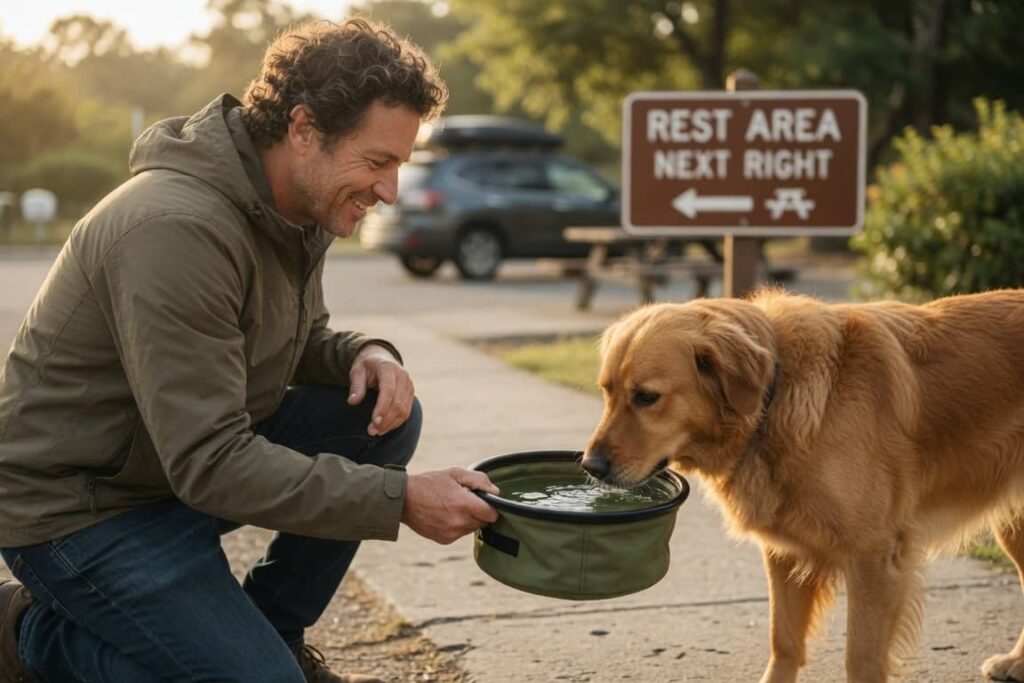
Plan to stop every two to three hours even if your dog seems fine. Puppies, seniors, and anxious dogs often need more frequent breaks. At each stop, leash your dog before you open any door. Walk to the designated pet area first so your dog can potty, then take a longer loop for exercise and mental relief.
Offer water after the walk, not before, and give praise when your dog settles back into the crate or harness without drama. Use these stops to check for hot spots on paws, signs of overheating, or anything stuck in fur. If your dog still seems restless after a good break, add five or ten extra minutes before getting back on the road. First-Time Dog Road Trip
Keeping Your Dog Calm and Comfortable During the Drive
Your own calm energy helps more than any gadget. Keep the car temperature between roughly 68 and 72 degrees when possible. In hot weather, a cooling gel mat or damp towel in the crate area makes a noticeable difference.
Watch early stress signals — excessive yawning, lip licking, whale eye, or sudden panting — and respond by stopping or adjusting the environment before the behavior escalates. Some dogs settle with low-volume classical music or a familiar audiobook playing; others do better with the radio off. If you’ve already tested a calming wrap or supplement on short drives and your vet approved it, this is when it earns its keep.
Avoid the temptation to constantly reach back and reassure. Most dogs read that as confirmation that something is wrong. Instead, use a steady, low voice only when your dog is already relaxed. First-Time Dog Road Trip
Common Mistakes Dog Owners Make on Road Trips
Letting a dog hang their head out the window looks joyful until a rock chip, bug, or branch causes real injury. Keep windows up enough that only a nose can fit through, or use a vent guard.
Leaving a dog alone in a parked car “just for five minutes” is never safe. Temperatures inside a vehicle climb dangerously fast even on mild days. Take your dog with you or arrange for someone to stay in the car with the AC running.
Skipping practice drives is another frequent regret. A dog that has only ever ridden ten minutes at a time can melt down when faced with four straight hours. The short training sessions you do beforehand prevent most meltdowns.
Overfeeding right before departure or introducing new treats on the road often leads to stomach upset that could have been avoided. Stick to familiar food and small, tested rewards.
Emergency Preparedness: What If Something Goes Wrong your First-Time Dog Road Trip
Before you leave, spend ten minutes on your phone finding 24-hour emergency veterinary clinics along your exact route and at your destination. Save the numbers in your contacts and print one copy to keep in the glove box.
If your dog escapes at a rest stop, stay calm and lower your voice instead of chasing or yelling. Use high-value treats and a happy recall command while another person gently blocks obvious escape routes. If the dog runs into traffic or woods, prioritize human safety first and call local animal control immediately with a description and last-seen location.
For minor issues on the road, basic first-aid knowledge helps bridge the gap to a clinic: know how to check gum color, apply pressure to bleeding, and safely move an injured dog onto a blanket or board. If anything feels serious — persistent vomiting, difficulty breathing, sudden lethargy, or injury — pull over and call the nearest emergency vet right away rather than waiting to “see if it passes.”
Conclusion
You’ve done the thoughtful work of learning how to prepare your dog for a road trip instead of hoping for the best. That preparation turns a potentially stressful drive into something you and your dog can actually enjoy together — the quiet miles, the new smells at stops, and the shared adventure at the other end.
Every dog is different, and you’ll keep refining what works for yours on future trips. If you’ve already taken your pup on a long drive, share what surprised you or what you’d do differently in the comments. Other readers planning their first journey will appreciate the real-world lessons. Remamber its your First-Time Dog Road Trip
Flying with Dogs in 2026: The Ultimate Stress-Free Guide
First-Time Dog Road Trip First-Time Dog Road Trip First-Time Dog Road Trip First-Time Dog Road Trip First-Time Dog Road Trip First-Time Dog Road Trip


