Home Blog

First-Time Dog Road Trip? How to Prepare for a Smooth Journey 8 Essential Tips

0
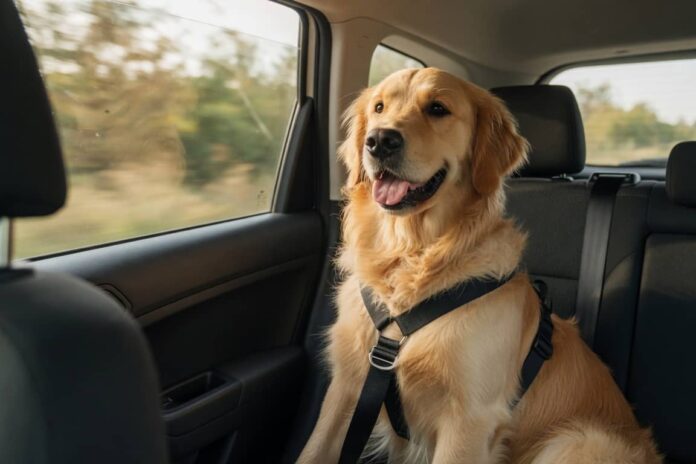
Dog Secured in Car Seat for Road Trip
A properly secured dog enjoys a safe, comfortable ride

Prepare Your Dog for a Road Trip: 8 Essential Tips First-Time Dog Road Trip

First-Time Dog Road Trip? You’ve double-checked the route, packed the snacks, and now you’re standing in the driveway staring at the car. Your dog is bouncing around with excitement, but your stomach is tight. This isn’t a quick trip to the park — it’s a real road trip, four hours or more, and you keep picturing every possible thing that could go wrong. Will your dog get carsick? Panic in the crate? Need to go at the worst possible moment?

You’re not alone in that worry. Plenty of dog owners put off longer drives because they’re unsure how to keep their pet comfortable and safe the whole way. This guide walks you through how to prepare your dog for a road trip using the same approach that’s worked for my own dogs over years of cross-country moves and weekend adventures. We’ll cover timing, health basics, the right gear, training that actually sticks, what to pack, feeding and stopping rhythms, keeping everyone calm, common pitfalls, and what to do when plans change. By the end you’ll feel ready instead of rattled. First-Time Dog Road Trip

How Far in Advance Should You Start Preparing Your First-Time Dog for a Road Trip?

Start the real preparation two to four weeks out if this is your dog’s first long journey. That window gives you time to handle vet needs, test new gear, and run practice drives without cramming everything into the final days.

Four weeks ahead, map your route and note any overnight stops so you can confirm pet policies. Schedule the vet appointment for the following week. Begin introducing the crate or harness in short, positive sessions. Three weeks out, take your dog on two or three progressively longer practice drives — twenty minutes, then forty, then an hour — always ending with praise and a favorite walk.

One week before departure, buy or confirm any missing items on your list and do a full test run of the restraint system. Pack the non-perishables so you’re not rushing the night before. The day before you leave, give your dog a solid walk or play session to burn off energy, feed a normal but not oversized meal in the evening, and get yourself to bed early. Rushing around stressed the morning of the trip rubs off on your dog fast.

Vet Check-Up and Health Essentials Before You Leave

Book a vet visit ten to fourteen days before you go. Bring up the upcoming trip specifically and ask about motion sickness options if your dog has ever drooled or vomited on shorter rides. Request printed copies of the rabies certificate and vaccination records — many emergency clinics and boarding facilities want to see them on the spot.

Confirm the microchip is registered with current contact information and that the collar ID tag shows your cell number plus a backup person who knows you’re traveling. If your dog takes daily medication, ask the vet for an extra prescription or enough refills to cover delays. This is also the time to discuss any anxiety or arthritis supplements you might trial on short drives first.

If your veterinarian asks whether this is your dog’s first road trip, be honest. If it is, simply say, “Yes, this is my dog’s first road trip.” That information helps your vet give advice that’s appropriate for a first-time travel experience.

American Veterinary Medical Association (AVMA) — Traveling with Your Pet

Choosing the Right Crate, Carrier, or Safety Harness to Prepare Your Dog for a Road Trip

A loose dog in a moving vehicle is one of the fastest ways a pleasant trip turns dangerous. Even a well-behaved dog can become a projectile in a sudden stop or swerve, and an unrestrained dog can easily slip out an open door at a rest area.

Crash-tested harnesses that clip directly into the seatbelt system work well for many dogs who prefer to sit up and look around. Choose one sized correctly so the dog can lie down comfortably but cannot reach the front seats. For dogs who settle better with walls around them, a sturdy crate anchored to cargo tie-downs or seatbelt loops is often the safer choice. Make sure the crate is large enough for the dog to stand, turn, and lie down naturally, and always secure it so it cannot slide or tip.
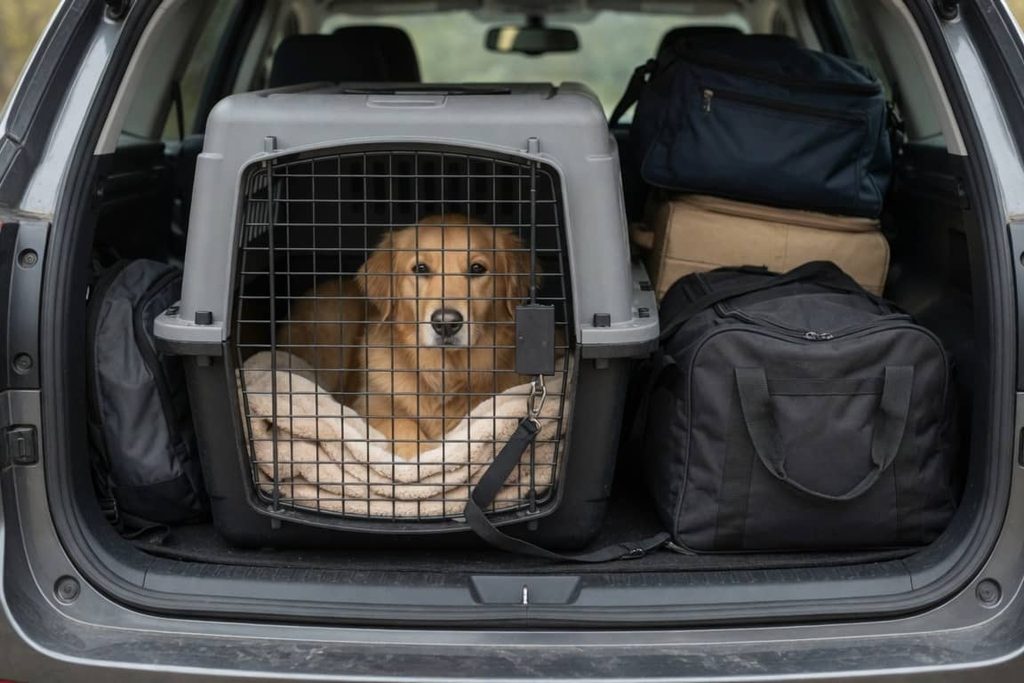
First-Time Dog Road Trip

Pet barriers across the cargo area of an SUV can work if your dog is already reliable in the back, but they still need a harness or tether so they cannot launch forward in a crash. Whichever option you pick, test it on a drive around the block before the real trip. If anything feels loose or uncomfortable, adjust or switch it now.

Center for Pet Safety — Crash Test Certified Products for First-Time Dog Road Trip

Crate and Car Training to Prepare Your Dog for a First-Time Dog Road Trip

If your dog only rides in the car for short errands, treat the long trip like a skill that needs practice. Begin crate or harness work while the car is parked in the driveway. Feed meals inside the crate or while wearing the harness for several days so the association stays positive.

Next, sit in the parked car together with the engine running for five or ten minutes, handing out treats and calm praise. Only then move to actual short drives. If your dog whines, paces, or shows stress within the first ten to fifteen minutes, pull over safely, take a short walk, and end the session on a good note rather than pushing through. Forcing longer sessions early can teach your dog that car rides equal misery.

Build gradually over a couple of weekends: twenty-minute loops, then forty-five minutes, then a full hour with a rest stop in the middle. By the time the big trip arrives, the car feels routine instead of overwhelming.
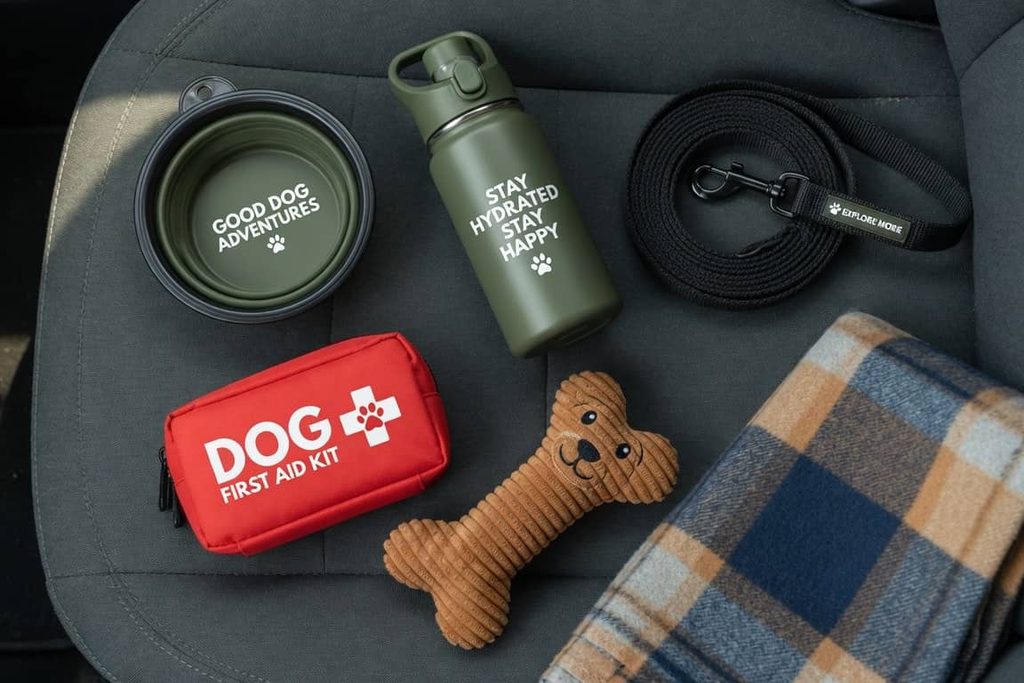
What to Pack: The Ultimate Road Trip Checklist for Dogs

Pack with the same care you’d use for a human family member. Here’s what actually earns its place in the car:

  • Pre-portioned food in zip bags or the original bag plus one extra day’s worth in case you’re delayed.
  • Several bottles or a jug of water plus a collapsible, non-spill bowl.
  • The travel harness or crate you’ve already tested, plus a backup flat collar and leash.
  • At least two rolls of waste bags and a small roll of paper towels plus enzyme cleaner for accidents.
  • A simple first-aid kit: vet wrap, antiseptic wipes, gauze, tweezers, blunt scissors, instant cold pack, and any regular medications in original labeled containers.
  • A printed copy of vaccination records and microchip details in a waterproof folder or zip bag.
  • One familiar blanket or old t-shirt that carries your scent, plus one quiet chew toy reserved only for the car.
  • A long line (20–30 feet) clipped to a secure anchor at rest stops so your dog can stretch and sniff without bolting.
  • A few high-value treats kept in your pocket or center console for calm behavior at stops.
  • A small trash bag dedicated to dog waste so you’re not hunting for a bin every time.

Keep the everyday leash and a spare in the front seat where you can reach it quickly.

Feeding and Hydration Rules for Travel Days

Feed a normal but slightly lighter meal two to three hours before departure so your dog has time to digest without a full stomach sloshing around curves. Skip the big breakfast on travel morning if your dog tends toward carsickness.

During the drive, offer water in small amounts at every stop after your dog has walked and pottied. Gulping large quantities on an empty or nervous stomach can trigger nausea. If the weather is hot, freeze a couple of water bottles the night before — they double as ice packs and give your dog cool water later in the day. Never withhold water entirely; just control the volume and timing.

Rest Stop Strategy: How Often Should You Stop?

Plan to stop every two to three hours even if your dog seems fine. Puppies, seniors, and anxious dogs often need more frequent breaks. At each stop, leash your dog before you open any door. Walk to the designated pet area first so your dog can potty, then take a longer loop for exercise and mental relief.

Offer water after the walk, not before, and give praise when your dog settles back into the crate or harness without drama. Use these stops to check for hot spots on paws, signs of overheating, or anything stuck in fur. If your dog still seems restless after a good break, add five or ten extra minutes before getting back on the road. First-Time Dog Road Trip

Keeping Your Dog Calm and Comfortable During the Drive

Your own calm energy helps more than any gadget. Keep the car temperature between roughly 68 and 72 degrees when possible. In hot weather, a cooling gel mat or damp towel in the crate area makes a noticeable difference.

Watch early stress signals — excessive yawning, lip licking, whale eye, or sudden panting — and respond by stopping or adjusting the environment before the behavior escalates. Some dogs settle with low-volume classical music or a familiar audiobook playing; others do better with the radio off. If you’ve already tested a calming wrap or supplement on short drives and your vet approved it, this is when it earns its keep.

Avoid the temptation to constantly reach back and reassure. Most dogs read that as confirmation that something is wrong. Instead, use a steady, low voice only when your dog is already relaxed. First-Time Dog Road Trip

Common Mistakes Dog Owners Make on Road Trips

Letting a dog hang their head out the window looks joyful until a rock chip, bug, or branch causes real injury. Keep windows up enough that only a nose can fit through, or use a vent guard.

Leaving a dog alone in a parked car “just for five minutes” is never safe. Temperatures inside a vehicle climb dangerously fast even on mild days. Take your dog with you or arrange for someone to stay in the car with the AC running.

Skipping practice drives is another frequent regret. A dog that has only ever ridden ten minutes at a time can melt down when faced with four straight hours. The short training sessions you do beforehand prevent most meltdowns.

Overfeeding right before departure or introducing new treats on the road often leads to stomach upset that could have been avoided. Stick to familiar food and small, tested rewards.
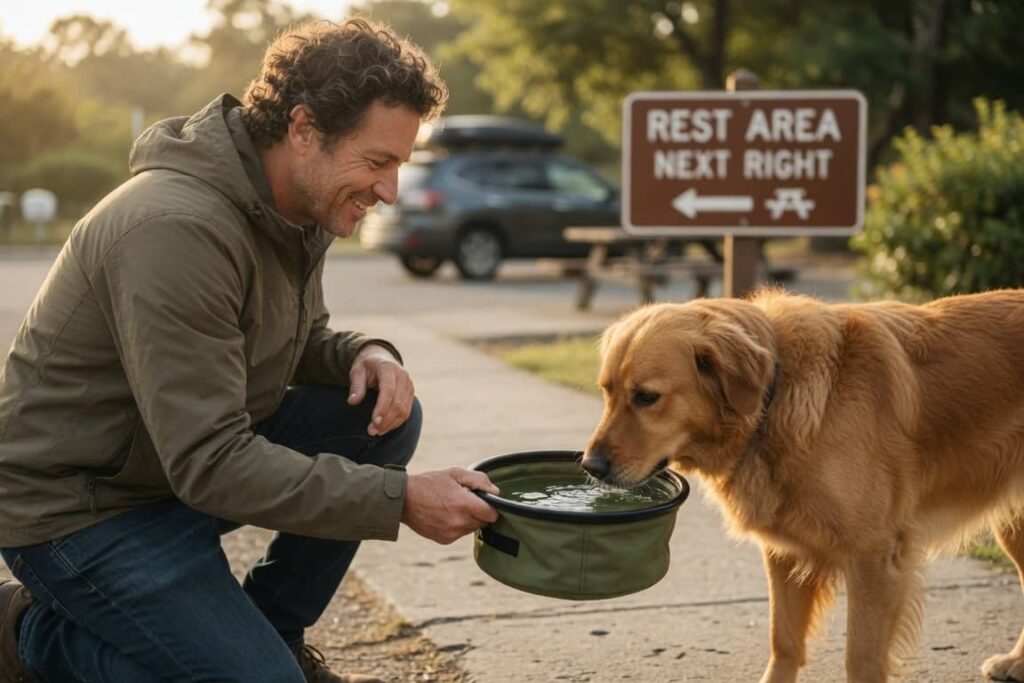
Dog owner giving pet water at an outdoor rest stop during a long road trip
Regular rest stops keep your dog hydrated and relaxed

Emergency Preparedness: What If Something Goes Wrong your First-Time Dog Road Trip

Before you leave, spend ten minutes on your phone finding 24-hour emergency veterinary clinics along your exact route and at your destination. Save the numbers in your contacts and print one copy to keep in the glove box.

If your dog escapes at a rest stop, stay calm and lower your voice instead of chasing or yelling. Use high-value treats and a happy recall command while another person gently blocks obvious escape routes. If the dog runs into traffic or woods, prioritize human safety first and call local animal control immediately with a description and last-seen location.

For minor issues on the road, basic first-aid knowledge helps bridge the gap to a clinic: know how to check gum color, apply pressure to bleeding, and safely move an injured dog onto a blanket or board. If anything feels serious — persistent vomiting, difficulty breathing, sudden lethargy, or injury — pull over and call the nearest emergency vet right away rather than waiting to “see if it passes.”

Conclusion

You’ve done the thoughtful work of learning how to prepare your dog for a road trip instead of hoping for the best. That preparation turns a potentially stressful drive into something you and your dog can actually enjoy together — the quiet miles, the new smells at stops, and the shared adventure at the other end.

Every dog is different, and you’ll keep refining what works for yours on future trips. If you’ve already taken your pup on a long drive, share what surprised you or what you’d do differently in the comments. Other readers planning their first journey will appreciate the real-world lessons. Remamber its your First-Time Dog Road Trip

Flying with Dogs in 2026: The Ultimate Stress-Free Guide 

First-Time Dog Road Trip First-Time Dog Road Trip First-Time Dog Road Trip First-Time Dog Road Trip First-Time Dog Road Trip First-Time Dog Road Trip
Flying with Dogs in 2026: The Ultimate Stress-Free Guide Don’t worry.

0
emirates-airline-dog-cargo-travel
Golden retriever sitting beside an airline-approved travel crate at the airport

Flying with Dogs: The Ultimate Stress-Free Travel Guide

You’ve finally booked the tickets for that long-awaited trip. The suitcases are zipped, the itinerary is set… and now you’re looking at the dog carrier sitting by the door. Your usually confident pup keeps giving it side-eye, and you’re wondering how on earth you’re going to get through airport security, possible delays, and the actual flight without your dog (or you) melting down. That mix of excitement and quiet dread is incredibly common for first-time pet flyers. The good news? With the right preparation, flying with dogs doesn’t have to be a nightmare. This guide walks you through the realities of airline pet policies, practical preparation steps, and real-world strategies that have helped many owners and their dogs travel smoothly.

Why Flying with Your Dog Feels Overwhelming

Rules change between airlines and routes. Your dog’s comfort and safety depend on factors you can’t fully control, like cabin pressure, temperature in the hold, or how busy the airport is that day. Add in the emotional weight of wanting to protect a family member who can’t tell you how they’re feeling, and it’s no wonder many people postpone or avoid flying with their pets altogether.

This guide cuts through the noise. We focus on the patterns that actually matter across most airlines, realistic timelines for preparation, and the small but powerful steps that reduce stress for both of you. Whether you’re heading across the country or across an ocean, the same core principles apply: know your options, prepare your dog in advance, and build in buffers for the unexpected.

Cabin or Cargo? Deciding What’s Right for Your Dog

Most airlines offer two main options for traveling dogs: in the cabin with you or as cargo in the pressurized baggage hold.

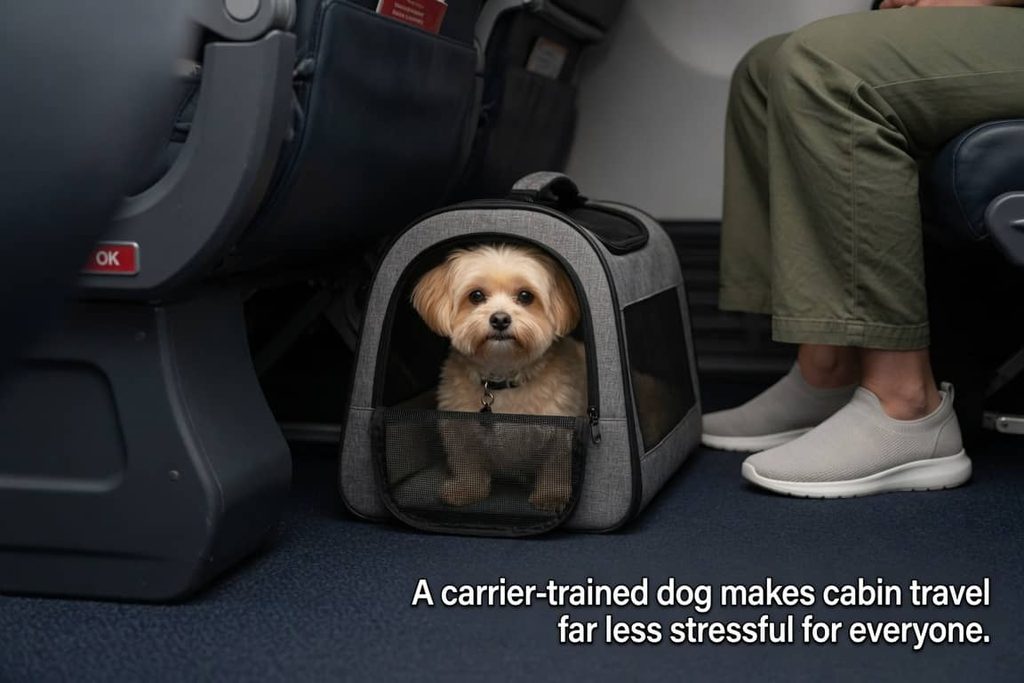
Cabin travel is generally limited to smaller dogs that can comfortably stand, turn around, and lie down inside a carrier that fits completely under the seat in front of you. It keeps your dog close, lets you monitor them throughout the flight, and usually involves less handling by airline staff. However, space is tight, and not every dog tolerates prolonged confinement in a small carrier.

Cargo travel accommodates larger dogs or those who exceed cabin size limits. The dog rides in a sturdy, airline-approved crate in a temperature-controlled section of the hold. While modern cargo holds are pressurized and ventilated, your dog will be out of your direct sight for the duration of the flight (and any ground time). Some airlines have limited or no cargo pet service on certain routes or aircraft.

How to decide: Start with your dog’s size and breed. Then consider temperament. A calm, crate-trained dog who enjoys den-like spaces often does well in cargo. A dog who panics when separated or has never spent time in a crate may do better in cabin if size allows. Direct flights are almost always preferable to connections when traveling with pets, regardless of cabin or cargo, because every transfer adds handling and potential delays.

If you have a brachycephalic (flat-faced) breed such as a pug, bulldog, or boxer, pay special attention. Many airlines restrict or prohibit these dogs from cargo travel, especially during warmer months, due to breathing and temperature-regulation challenges. In some cases, cabin may be your only realistic option or you may need to explore specialized pet transport services. Always confirm current rules for your exact itinerary rather than assuming based on past trips or other airlines.

Flying with Dogs 2026: Complete Airline Travel Guide

How Airline Pet Policies Generally Work

While every airline sets its own details, several patterns appear consistently. Carriers must typically be leak-proof, well-ventilated on at least three sides, and sturdy enough that they won’t collapse if something is placed on top (especially important for cargo). Soft-sided carriers are popular for cabin travel because they can be slightly compressed to fit under seats, but they still need a rigid frame or base in most cases.

Fees vary widely and are usually charged per pet, per direction. Cargo fees are almost always higher than cabin fees and may involve additional charges for oversized crates or special handling. Some airlines limit the number of pets allowed in cabin per flight or per passenger.

Breed restrictions are one of the biggest variables. Beyond brachycephalic dogs, some carriers have age minimums (commonly around eight weeks) and may refuse very young puppies or senior dogs with certain health conditions. International travel adds layers: most countries require a veterinary health certificate, proof of rabies vaccination, and increasingly a microchip. Some destinations demand additional titers, import permits, or even quarantine periods. These rules are set by the destination country, not the airline, so you must check both.

The single most important action you can take is to verify everything directly with your airline (and the destination government’s agriculture or veterinary authority) for your specific travel dates and route. Policies shift with regulations, aircraft changes, and seasonal considerations, so what was true last year may not be true now.

Airline Pet Policy Comparison: Emirates vs Qatar Airways vs Turkish Airlines

Emirates

  • Cabin allowed: No (falcons only, select Dubai–Pakistan routes)
  • Checked baggage/Hold: Yes, up to 300 cm total dimensions
  • Cargo required when: Over 32 kg or 300 cm
  • Estimated cost: Approx. $500–$800
  • Breed restrictions: Brachycephalic breeds banned (Bulldogs, Pugs, Persian cats)
  • Advance booking: 48–72 hours minimum
  • Minimum pet age: 15 weeks
  • Temperature limit: No travel above 29°C (85°F)
  • Official page: emirates.com

Qatar Airways

  • Cabin allowed: No (falcons and service dogs only)
  • Checked baggage/Hold: Yes, up to 75 kg combined weight
  • Cargo required when: Over 75 kg or 300 cm
  • Estimated cost: Approx. $200–$450
  • Breed restrictions: Brachycephalic and several breeds banned (Pugs, Bulldogs, Boxers, Pit Bulls)
  • Documentation: Health certificate (within 10 days), vaccination records, microchip/passport
  • Advance booking: At least 48 hours
  • Minimum pet age: 12 weeks
  • Temperature limit: Restricted above 21°C (69.8°F)
  • Official page: qatarairways.com

Turkish Airlines

  • Cabin allowed: Yes — cats, dogs & small birds up to 8 kg combined weight
  • Checked baggage/Hold: Yes, up to 50 kg (carrier max 75×75×125 cm)
  • Cargo required when: Over 50 kg or restricted breed
  • Estimated cost: From $70 (cabin, intl) to $120+ (checked baggage, intl
  • Breed restrictions: Large guard breeds cargo-only (Rottweiler, Doberman); brachycephalic breeds cabin-only
  • Documentation: Health certificate (within 10 days), vaccination records, microchip/passport
  • Advance booking: Up to 24 hours before, but earlier recommended
  • Minimum pet age: 10 weeks
  • Temperature limit: Cargo suspended above 29°C or below 7°C (May–Sept)
  • Official page: turkishairlines.com

Getting Ready: Your Pre-Flight Preparation Plan

Good preparation starts two to three weeks before departure and makes the biggest difference in how your dog experiences travel day.

Carrier acclimation is non-negotiable. If your dog only sees the carrier on the morning of the flight, expect stress. Begin by leaving the carrier open in a high-traffic area of your home with a favorite blanket and treats scattered inside. Once your dog voluntarily enters, start feeding meals in the carrier. Progress to closing the door for short periods while you’re in the same room, then while you step out briefly. Add short car rides with the carrier secured. The goal is to build a positive association so the carrier feels like a safe, predictable space rather than a trap. Dogs who have practiced this way are far less likely to bark, whine, or have accidents during the actual flight.

Schedule a veterinary visit strategically. Most airlines and destinations require a health certificate issued within a specific window before travel (often 10–30 days, though this varies). Book the appointment about 10–14 days out so you have time to address any issues the vet finds and still meet the validity window. Use this visit to discuss your dog’s individual travel risks — motion sensitivity, anxiety, or brachycephalic concerns — and ask about safe, vet-approved calming aids if needed. Never use over-the-counter sedatives or tranquilizers without specific veterinary guidance for air travel; altitude and pressure changes can make some medications risky.

Feeding and routine adjustments. Offer a light meal four to six hours before departure rather than a full breakfast or dinner right before the flight. This reduces the chance of motion-related stomach upset. Pack a collapsible silicone bowl and a small amount of familiar water. Many owners also bring a worn t-shirt or towel that carries your scent to place inside the carrier — the familiar smell helps more than most people expect.

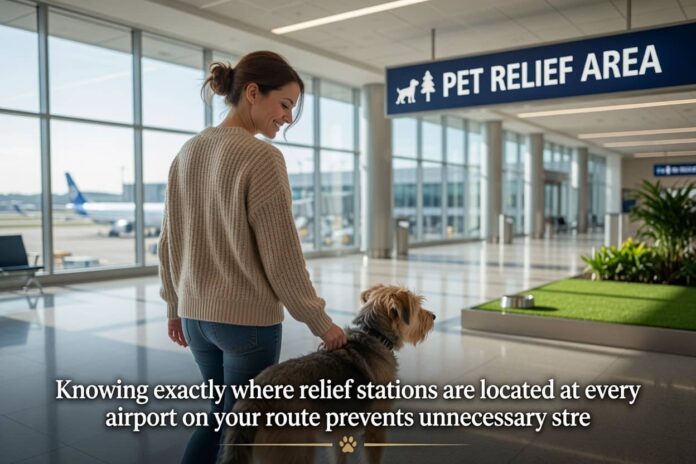
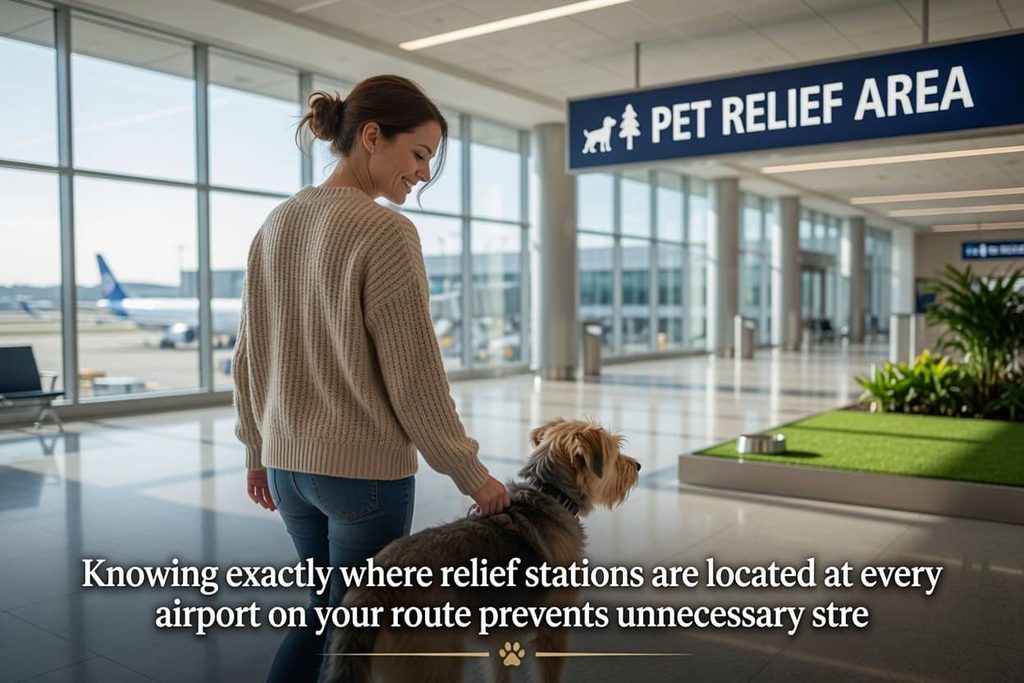
Map your airports in advance. Locate pet relief areas at your departure airport, any connection points, and your destination. Major airports publish maps online; knowing exactly where they are prevents frantic last-minute searches while your dog is already stressed. If your dog is sensitive to new surfaces or sounds, practice walking on different flooring types and hearing airport-like background noise (there are free airport ambience tracks online) during training sessions.

Additional practical steps: Update your dog’s microchip registration and ID tags with current phone numbers. Take clear, recent photos of your dog from multiple angles in case you need to describe them to staff. Prepare a simple travel kit with waste bags, paper towels, a couple of high-value treats, and any prescribed medications in original packaging.

On Travel Day: Airport and Flight Strategies

Give yourself more time than usual — at least two hours for domestic flights and three or more for international. This buffer lets you handle check-in, security, and any unexpected paperwork without rushing your dog.

At security, expect to remove your dog from the carrier while the empty carrier goes through the scanner. Practice this exact sequence at home with a friend or family member playing the role of TSA agent. Keep your own energy calm; dogs mirror our stress levels quickly.

Once onboard (cabin), slide the carrier fully under the seat and resist the urge to check on your dog constantly. A quiet voice or gentle reassurance through the mesh is usually enough. If your dog begins showing strong stress signals (persistent high-pitched whining, heavy panting, or frantic movement), alert a flight attendant rather than trying to open the carrier mid-flight.

For cargo travel, your main influence happens before you hand over the crate. Make sure it is clearly labeled on all sides with your name, phone number, flight details, and “Live Animal” markings. Confirm with the airline whether they provide any updates during ground time. Many owners find that choosing a direct flight, even at a slightly higher fare, dramatically reduces overall stress compared with connections.

Pitfalls to Sidestep When Flying with Your Dog for the First Time

The most common mistake is assuming all airlines operate the same way. What worked for your friend’s dog on one carrier may be completely different on yours. Another frequent issue is skipping carrier training and then being surprised when the dog panics on departure day. Tight connection times are also risky — one delayed inbound flight can cascade into missed connections and extra handling for your pet.

Many first-timers also forget to confirm destination entry rules until they land, only to discover an extra form or vaccine requirement. Over-stuffing the carrier with toys or bedding can actually make dogs more uncomfortable and increase the chance of messes. Finally, some owners choose cargo for a dog who would have been fine in cabin simply because they didn’t measure the carrier against the airline’s under-seat dimensions early enough.

Final Thoughts: Your Dog’s Next Adventure Awaits

Flying with dogs is very doable when you treat preparation as a gradual, positive process rather than a last-minute scramble. Thousands of dogs travel by air every week, and many of them handle it remarkably well once their humans put in the upfront work. Your dog will take cues from you. If you approach the journey with calm confidence and a well-trained carrier routine, your pup is far more likely to stay relaxed too.

Start early, verify everything directly with your airline and destination authorities, and give yourself (and your dog) extra grace on travel day. The memories you’ll make together are worth the effort.

Have you already flown with your dog, or are you planning your first trip? What surprised you most, or what specific worry are you still carrying? Share your experiences or questions in the comments — your story could make the next pet parent’s journey a little smoother. Safe travels to you and your four-legged adventure buddy.

How to Prepare Your Dog for a Long Road Trip
How to Prepare Your Dog for a Long Road Trip

0

How to Prepare Your Dog for a Long Road Trip

Los Angeles Travel Guide: The Ultimate City of Dreams

0

Your complete guide to exploring LA — beaches, landmarks, food, and hidden gems

By Travel Desk  |  Updated June 2026  |  Reading Time: 8 mins

Los Angeles skyline — a city that never stops dreaming

Why Los Angeles Should Be Your Next Destination

Los Angeles is more than just Hollywood glamour and movie stars. It is a sprawling, sun-soaked metropolis where Pacific beaches meet urban jungles, where world-class art galleries sit beside taco stands, and where every neighbourhood tells a different story. With over 300 days of sunshine a year, Los Angeles is one of the most inviting cities on the planet for travellers seeking diversity, culture, and coastal beauty.

Whether you are chasing the thrill of theme parks, the serenity of beach sunsets, the buzz of live music, or the flavours of an impossibly diverse food scene, LA delivers — and then some. This comprehensive travel guide covers everything you need to plan the perfect Los Angeles trip, from iconic landmarks to hidden neighbourhoods, budget tips to luxury escapes.

✈ Quick Facts: Los Angeles at a GlanceBest time to visit: March–May or September–November | Currency: USD | Language: English | Time Zone: PST (UTC-8) | International Airport: LAX | Known for: Hollywood, Beaches, Cuisine, Culture

Top Attractions in Los Angeles

Los Angeles is home to some of the most recognisable landmarks in the world. Here is your essential list of must-see sights.

1. The Hollywood Sign

The iconic Hollywood Sign — visible from miles across the city

Perched high in the Santa Monica Mountains, the Hollywood Sign is the ultimate symbol of the city’s cinematic soul. The nine white letters, each 45 feet tall, have overlooked Los Angeles since 1923. While you cannot walk up to the sign itself, several hiking trails in Griffith Park — including the popular Brush Canyon Trail — offer magnificent close-up views. Sunrise hikes are especially rewarding, when the city below is still quiet and golden light catches the letters perfectly.

2. Griffith Observatory

Griffith Observatory overlooking the glittering lights of Los Angeles

Griffith Observatory is arguably the most spectacular free attraction in Los Angeles. Sitting atop Mount Hollywood, it offers sweeping panoramic views of the city, the Hollywood Sign, and on clear days, the Pacific Ocean. The observatory houses a state-of-the-art planetarium, public telescopes, and exhibits on astronomy and space exploration. Evenings here are magical — the city lights spread below like a circuit board of a billion dreams. Admission to the grounds and main building is always free.

3. Santa Monica Pier and Beach

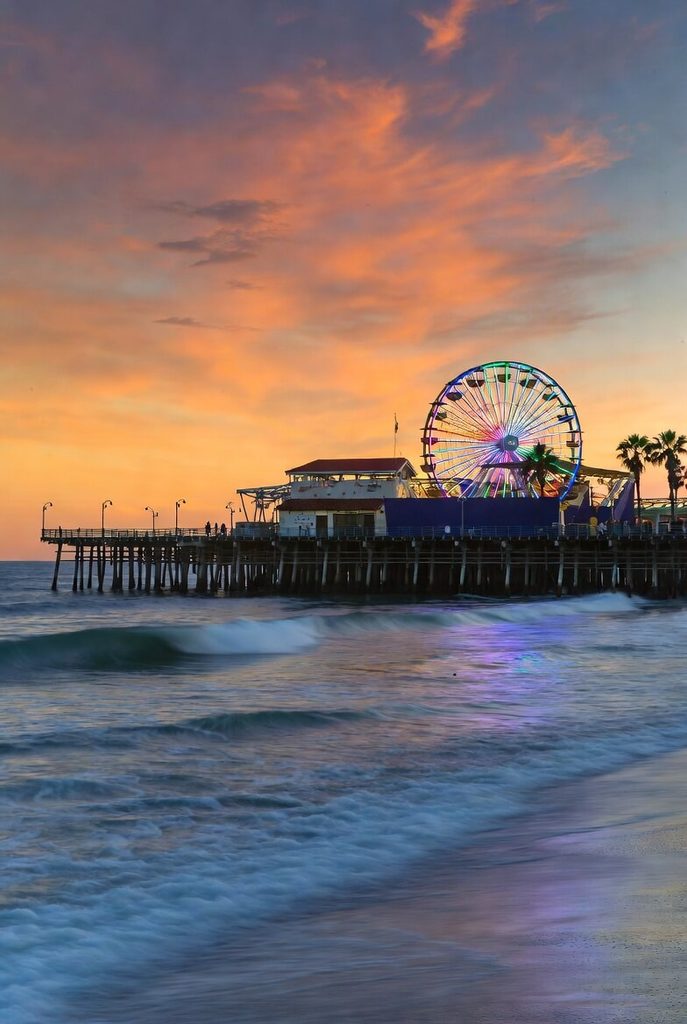
Santa Monica Pier — the jewel of the Los Angeles coastline

Santa Monica Pier is the most famous pier on the West Coast and a quintessential Los Angeles experience. With its vintage carousel, amusement park rides, and the iconic “End of Route 66” sign, it is a place where history and leisure collide beautifully. The broad white-sand beach stretching for miles in either direction is perfect for cycling, rollerblading, or simply watching the Pacific waves roll in. Rent a bike and ride the famous Marvin Braude Bike Trail — a 22-mile coastal path that remains one of the great urban cycling routes in the world.

Best Neighbourhoods to Explore

Los Angeles is not one city but a collection of distinct villages, each with its own personality. Knowing where to go makes all the difference.

Venice Beach

Venice Beach is LA’s creative heartbeat — a bohemian strip of street performers, muralists, bodybuilders at Muscle Beach, and some of the most eclectic shopping in the city. The canals of Venice, just a few blocks inland, offer a surprisingly tranquil escape that feels worlds away from the boardwalk chaos.
Silver Lake

Silver Lake is the hipster cultural capital of East LA. Independent coffee shops, vinyl record stores, LGBTQ+ friendly bars, and some of the city’s most innovative restaurants line its hilly streets. The Silver Lake Reservoir is a lovely spot for a morning walk, surrounded by craftsman bungalows and street art.

Downtown Los Angeles (DTLA)

Downtown LA has undergone a remarkable renaissance in recent years. The Grand Central Market — a historic food hall open since 1917 — remains the neighbourhood’s culinary soul, while the Broad Museum and the Museum of Contemporary Art anchor its arts scene. The Arts District, with its warehouse galleries and craft breweries, is particularly worth an afternoon of exploration.

Koreatown

One of the most densely populated neighbourhoods in the USA, Koreatown is a 24-hour city within a city. Legendary Korean BBQ restaurants, karaoke bars, bakeries, and spas make this one of the most vibrant and authentic cultural enclaves in all of Los Angeles. Do not miss a late-night bowl of soon tofu jjigae after a round of karaoke.

Los Angeles Food Guide: What and Where to Eat

Los Angeles has arguably the most diverse food scene of any city in the United States. Its combination of immigrant communities, celebrity chef culture, and farm-to-table ethos creates a culinary landscape that is endlessly rewarding.

Must-Try Foods in LA:

  • Street tacos from East LA — al pastor, carnitas, and carne asada are legendary here
  • Sushi in Little Tokyo — some of the finest omakase outside Japan can be found on 1st Street
  • Persian food in Tehrangeles — the Westwood area has a remarkable concentration of authentic Persian cuisine
  • Smash burgers — LA has elevated the humble burger to an art form, with dozens of iconic spots
  • Avocado toast and cold brew — yes, it is a cliché, but Silver Lake cafes do it better than anywhere
  • Ethiopian cuisine in Little Ethiopia on Fairfax Avenue — communal dining at its very best
✈ Traveller’s Food Budget TipLA has excellent food at every price point. The Grand Central Market downtown has stalls serving outstanding meals for under $15. For an authentic and affordable taco experience, head to Boyle Heights on a Saturday morning — the taco trucks here are widely regarded as the best in the city.

Getting Around Los Angeles

Los Angeles has a reputation as a car-dependent city, and while that is historically accurate, transport options have improved dramatically. Here is what you need to know:

Metro Rail and Bus

The LA Metro system has expanded considerably and now connects many key areas including Santa Monica (Expo Line), Hollywood (Red Line), and Koreatown. A TAP card gives you unlimited access and costs just $1.75 per journey. The Metro is genuinely the best way to avoid the city’s notorious traffic during rush hours.

Ride-Sharing

Uber and Lyft are widely available and competitively priced throughout LA. For airport transfers from LAX, they are often the most convenient option, though surge pricing during peak hours can be significant.

Cycling

For beach areas, cycling is wonderful. The 22-mile Marvin Braude Coastal Bike Trail from Pacific Palisades to Torrance Beach is one of the great urban cycling experiences in North America. Bike share programmes (Metro Bike Share) are available in downtown and surrounding areas.

Practical Travel Tips for Los Angeles

  • Sunscreen is not optional — the LA sun is intense year-round, even when it feels overcast
  • Book popular restaurants well in advance, especially for weekend dinners
  • Universal Studios and Disneyland require a full day each — purchase tickets online to skip queues
  • Parking in West Hollywood, Beverly Hills, and Santa Monica can be expensive and scarce; use Metro or ride-share
  • The “June Gloom” phenomenon means coastal areas are frequently overcast in the morning during May–June, clearing by afternoon
  • Tipping is expected in restaurants (18–20%), bars, and taxis
  • Water is safe to drink from the tap throughout the city

Final Thoughts: Los Angeles Awaits

Los Angeles is a city that resists easy summary. It is sprawling and intimate, glamorous and gritty, sunny and shadowed by complexity. But that is precisely what makes it one of the most fascinating destinations on earth. Every visitor leaves with a different story, a different favourite taco spot, a different memory of the Pacific at sunset.

Come with curiosity, stay for the sunshine, and leave with a deep appreciation for a city that has always dared to dream bigger. Los Angeles will not disappoint.

Have questions about your LA trip? Drop them in the comments below!

Turkey Travel Guide 2026: Hidden Destinations, Culture & Authentic Experiences

0
Turkey Travel Guide 2026

Introduction

Turkey is one of the most geographically, culturally, and historically layered countries on the planet. It sits at the junction of Europe and Asia, hosts the remains of at least twelve distinct civilizations, and encompasses landscapes ranging from volcanic plains and salt lakes to subtropical coasts and alpine meadows — all within a single national border.

And yet, the majority of international visitors see only a narrow slice of this country: Istanbul’s historic peninsula, the coastal resorts of Antalya and Bodrum, and perhaps Cappadocia. What lies beyond these corridors is largely unknown to foreign travelers — and that is precisely where niche travel begins.

This guide has been written for travelers who are not satisfied with the surface. It is for those who want to walk through a 2,000-year-old underground city without a tour group, eat a breakfast assembled entirely from a single village’s production, attend a whirling ceremony that is not a tourist performance, and sleep in a stone house older than most European nations.

Turkey rewards the traveler who comes prepared, curious, and willing to move slowly. This guide is your foundation.

Why Turkey Belongs in Niche Travel

Civilizational Depth

Few countries on earth can match Turkey’s archaeological and historical density. The Anatolian plateau was inhabited continuously for over 10,000 years. Catalhoyuk, one of the world’s first urban settlements, is located in central Turkey and dates to 7500 BCE. The Hittite Empire, the Kingdom of Lydia, the Persian satraps, the Hellenistic successor states, the Roman and Byzantine Empires, the Seljuk Sultanate, and the Ottoman Caliphate all left physical and cultural marks on this land that remain visible today.

For the historically motivated traveler, Turkey offers an unbroken narrative thread stretching across millennia. Visiting the ruins at Ephesus, the rock churches of Cappadocia, the Seljuk caravanserais of the Anatolian steppe, and the Armenian monasteries of eastern Anatolia within a single journey is an experience that no other country can replicate.

Ecological Diversity

Turkey contains eight distinct terrestrial biomes. Its coastlines span the Aegean, the Mediterranean, the Black Sea, and the Sea of Marmara. The interior plateau is semi-arid steppe. The northeast is characterized by temperate deciduous forest and alpine terrain. The southeast transitions toward the Fertile Crescent and Mesopotamian lowlands.

This ecological range supports extraordinary biodiversity and provides the basis for niche experiences including birdwatching expeditions at the Kizilirmak Delta, botanical trekking in the Taurus Mountains, underwater archaeology diving in Kas, and winter wilderness travel in the Kackar range.

Living Cultural Traditions

Turkey’s cultural landscape is not merely historical. Living traditions of craft, cuisine, music, and ceremony continue to be practiced authentically across many regions. Carpet weaving in central Anatolia, copper craftsmanship in Gaziantep, ceramic production in Kutahya, and the sema ceremony of the Mevlevi order are not museum pieces. They are active, skilled traditions maintained by communities who depend on them economically and spiritually.

For the culturally motivated niche traveler, Turkey offers direct access to artisan communities, workshops, and ceremonial events that exist largely outside the tourism economy and therefore retain their integrity.

Niche Destinations Across Turkey

The following destinations have been selected for their capacity to deliver exceptional niche experiences. Each represents a Turkey that most international visitors never encounter.

Hatay — The Multicultural Southern FrontierSouthern Anatolia, Hatay Province
Type: Cultural, Historical, Culinary, Religious     Best Season: October to April     Duration: 4 to 7 days     Price Level: Affordable (USD 40 to 80 per day)
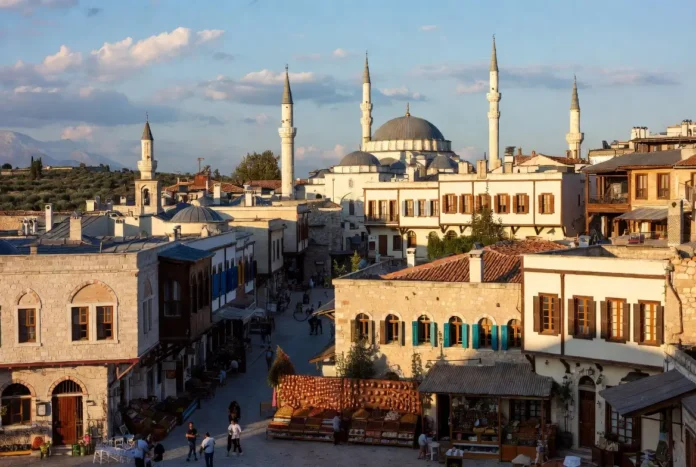
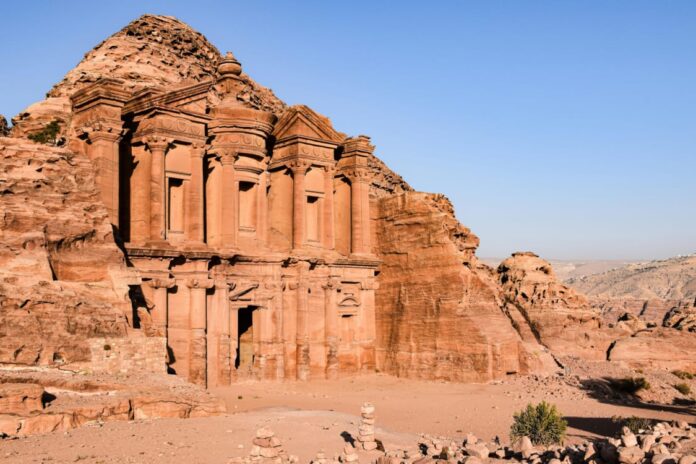
Hatay occupies a unique position in both geography and culture. Administered as part of the French Mandate of Syria until 1939, the province retains a cultural distinctiveness from the rest of Turkey that is immediately perceptible. Its population includes Arab Alawites, Arab Sunnis, Turkish speakers, Armenian Christians, Greek Orthodox communities, and a small Jewish congregation — one of the most genuinely diverse provinces in the entire country.Antioch, the ancient city whose ruins underlie modern Antakya, was among the most important cities of the early Christian world, the third city of the Roman Empire, and a center of Syriac and Byzantine ecclesiastical culture. The Antakya Archaeological Museum houses a Roman mosaic collection rivaling Gaziantep in quality. The city’s cuisine is considered distinct even by Turkish culinary standards, with dishes such as oruk, hummus made from boiled rather than tinned chickpeas, and a broad range of Arab-influenced mezze that reflect the province’s Syrian cultural heritage. The Church of Saint Peter, carved into a cliff face on the outskirts of the city, is considered among the oldest Christian places of worship in the world and remains a site of active pilgrimage.
Eskisehir — Meerschaum Craft and University CultureCentral Anatolia, Eskisehir Province
Type: Cultural, Craft, Slow Travel     Best Season: Year-round (Spring and Autumn preferred)     Duration: 2 to 4 days     Price Level: Affordable (USD 35 to 70 per day)
Eskisehir is one of Turkey’s most underrated cities for niche travelers seeking the intersection of living craft tradition and contemporary urban culture. The city is the world’s primary source of meerschaum, a hydrous magnesium silicate mineral uniquely suited to pipe and sculpture carving. Meerschaum workshops in the city allow visitors to observe carvers at work and, in some cases, attempt supervised carving sessions under guidance.The Porsuk River runs through the city center and its banks have been developed into a series of canal districts, cafe streets, and pedestrian corridors that give Eskisehir a European character unusual in Anatolian cities. The city hosts two major universities and has a young, engaged population that sustains a genuine cultural scene including theater, independent cinema, and ceramics. The nearby Phrygian Valley, containing rock-cut Phrygian monuments including the facade of the Midas Monument dating to the 8th century BCE, is rarely visited and can be explored in a half-day excursion with a private vehicle.

Niche Experience Categories in Turkey

Underground Cities and Cave Archaeology

Cappadocia’s underground cities at Derinkuyu and Kaymakli are well documented, but the region contains over 200 subterranean settlements of varying size and accessibility. Several can only be entered with a specialist archaeologist guide, are not signposted, and receive no tourist traffic. Connecting with the Nevsehir Archaeological Museum to arrange access to off-circuit sites is a viable approach for serious travelers.

Beyond Cappadocia, the rock-cut churches of the Peristrema Valley, the cave monasteries of Guzelyurt, and the underground granaries of the Hatay region all represent archaeological niche experiences that reward dedicated research and local guide relationships.

Whirling Ceremony and Sufi Traditions

The Mevlevi Order, founded in Konya by the followers of Jalaluddin Rumi in the 13th century, practices the sema — a meditative ceremony involving structured movement, music, and prayer — as a genuine spiritual discipline, not a performance. Authentic sema ceremonies take place in Konya on specific dates in the religious calendar and in several tekke houses across Istanbul’s historic neighborhoods.

Attending an authentic ceremony requires advance research into the Mevlevi calendar, introduction through a local cultural contact, and an understanding of appropriate conduct. The experience is categorically different from the tourist sema performances offered in Istanbul restaurants and Cappadocia hotels. Konya itself, as the city most associated with Rumi’s legacy and the home of the Mevlana Museum, warrants a minimum of three days for serious engagement.

Turkish Bath Culture and Historic Hammams

The hammam tradition in Turkey is over 600 years old and remains a living social institution in many provincial cities. The most historically significant hammams — including the Cemberlitas and Suleymaniye hammams in Istanbul, and the Tarihi Sivas hammam dating to the Seljuk period — offer an experience grounded in centuries of continuous practice.

Niche travelers should seek hammams that serve local communities rather than tourist circuits, where the experience has not been reconfigured for foreign comfort expectations. Hammams in Bursa, Edirne, Konya, and Kayseri operate primarily for local clientele and maintain the traditional sequence of heat, massage, and rest that defines the authentic form.

Carpet Weaving and Textile Traditions

Turkish carpet and kilim weaving encompasses dozens of distinct regional traditions, each with its own color palette, motif vocabulary, and technical method. The carpets of Hereke, woven with silk on silk, represent the finest tier of pile carpet production in the world and take years to complete. Village kilims from the Aegean highlands, woven in wool on wool with natural dyes, represent a completely different tradition of equal cultural significance.

Engaging with carpet culture at the niche level means visiting cooperative weaving workshops in villages such as Dobag in the Bergama region, where natural dye revival programs have operated since the 1980s, and speaking directly with weavers about the symbolic content of their patterns. It means learning to distinguish regional traditions and understanding the economics of a craft that sustains communities across multiple provinces.

Planning Your Turkey Niche Journey

Logistics Overview

Turkey is logistically accessible for the prepared traveler. The national carrier, Turkish Airlines, operates an extensive domestic network connecting Istanbul with Gaziantep, Mardin, Trabzon, Hatay, Konya, Eskisehir, and dozens of other cities. The intercity bus network is punctual, comfortable, and affordable, and covers routes that domestic flights do not. Rental vehicles are available in all major cities and are highly recommended for accessing villages, rural archaeological sites, and mountain terrain.

Entry RequirementsCitizens of most Western countries receive e-visas online prior to arrival. Processing takes 24 to 72 hours. Always verify current requirements with the official Turkish e-visa portal 30 days before travel.
CurrencyTurkish Lira (TRY). International ATMs are widely available in cities. Carry cash for rural markets, village accommodation, and artisan workshops, which rarely accept cards.
LanguageTurkish is the primary language. English is spoken in Istanbul and tourist areas. Outside these zones, basic Turkish phrases significantly improve access and reception. Kurdish dialects are spoken in the southeast.
HealthNo mandatory vaccinations for most nationalities. Hepatitis A and typhoid are recommended for travelers visiting rural areas and eating from street vendors. Tap water is generally not recommended for drinking outside major cities.
ConnectivityMobile data coverage is reliable across cities and major highways. Coverage deteriorates significantly in the Kackar Mountains, remote Anatolian villages, and southeastern border regions. Download offline maps before departure.
SafetyTurkey is a safe destination for most niche travel experiences. The southeastern provinces bordering Syria and Iraq require current Foreign Ministry advisories to be checked before itinerary planning. Exercise standard urban precautions in large city centers.
Best Travel PeriodSpring (April to June) and autumn (September to November) offer the most comfortable temperatures across most regions. The Kackar and mountain routes are accessible only from June to September. Southeastern sites are best visited in winter to avoid extreme heat.

Recommended Journey Structures

Turkey is large enough to warrant thematic itinerary planning rather than geographic sweeping. The following frameworks represent proven structures for niche travel.

  • Civilizational Arc (14 to 21 days): Istanbul, Bursa, Konya, Cappadocia, Mardin, Hatay. Follows the progression from Byzantine to Seljuk to Ottoman to multicultural southern Anatolia.
  • Culinary Circuit (10 to 14 days): Istanbul markets, Bursa kebab culture, Gaziantep, Hatay, Sanliurfa. Among the most gastronomically dense routes in the eastern Mediterranean.
  • Black Sea and Mountain (12 to 18 days): Safranbolu, Amasya, Trabzon, Rize, Kackar plateau trekking. Combines Ottoman heritage towns with the most ecologically dramatic landscape in the country.
  • Eastern Anatolia Deep Dive (14 to 21 days): Kayseri, Sivas, Malatya, Diyarbakir, Mardin, Van. Requires higher logistical preparation but delivers an almost complete absence of mass tourism.
  • Artisan Focus (10 to 14 days): Istanbul grand bazaar workshops, Kutahya ceramics, Eskisehir meerschaum, Hereke silk carpet looms, Bergama Dobag cooperative. For travelers whose primary interest is Turkish craft tradition.

Responsible and Ethical Travel in Turkey

Supporting Artisan Economies

Turkish craft traditions face the same pressures facing skilled handwork globally: low-cost machine reproduction, aging practitioner populations, and insufficient economic return for the time investment required. When purchasing carpets, ceramics, copper goods, or meerschaum, buying directly from verified workshop producers rather than bazaar intermediaries ensures that a substantially larger proportion of the purchase price reaches the maker.

Cooperatives such as the Dobag natural dye project and various village weaving associations in central and eastern Anatolia have built transparent supply chains that allow travelers to verify provenance and understand the labor behind the product. Choosing these channels over tourist bazaar retail is the single most impactful economic decision a craft-focused traveler can make.

Navigating Political and Cultural Sensitivity

Turkey contains regions where ethnic, religious, and political histories are complex and sometimes contested. The Kurdish southeast, the Alevi heartlands of central Anatolia, and the former Armenian communities of eastern Anatolia all carry histories that require sensitivity and prior reading before engagement. Travelers who approach these histories with curiosity and respect will find extraordinary generosity. Those who arrive with fixed political positions or provocative intent will find doors closed.

Photography at religious sites, military facilities, and in conservative rural communities requires explicit permission. In Syriac and Armenian Christian communities, where the relationship between tourism and cultural appropriation has been a point of tension, asking before photographing is both ethically required and practically wise.

Seasonal and Environmental Responsibility

The Kackar alpine meadows, Anatolian steppe ecosystems, and coastal marine environments are sensitive to visitor pressure. Trekking without a licensed guide in high-altitude terrain increases both ecological impact and personal safety risk. Coastal diving and snorkeling in protected marine areas such as the Kas-Kekova zone is regulated, and choosing operators certified by the Turkish Underwater Sports Federation ensures compliance with conservation protocols.

Turkish Food Culture for the Niche Traveler

Turkish cuisine is not a single tradition. It is an accumulation of regional food cultures that differ from one another as significantly as French and Spanish cuisine differ within Europe. The traveler who eats only doner kebab and baklava in Istanbul has encountered perhaps five percent of the country’s actual culinary range.

Regional Distinctions

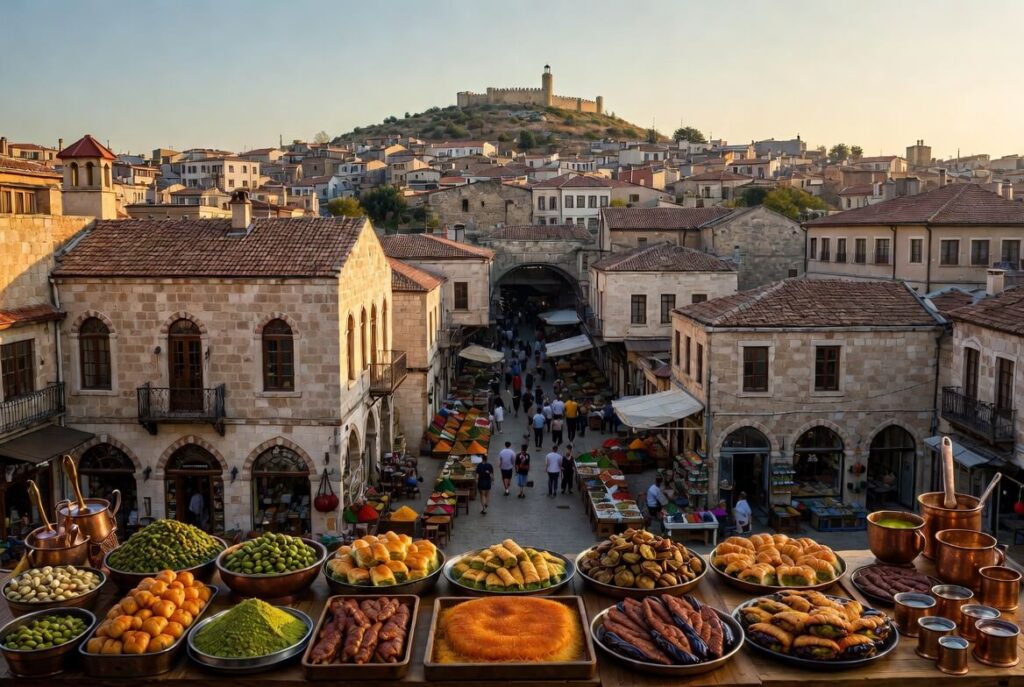
The Black Sea coast produces a cuisine defined by corn flour, anchovies, butter, and foraged greens. The Aegean coast draws on olive oil, wild herbs, and Hellenic culinary influences. The Gaziantep region is characterized by pistachio, lamb, red pepper paste, and Syrian-influenced spice combinations. The Van breakfast tradition in eastern Anatolia — a meal that can extend for two hours and include thirty distinct items including local herb cheese, honeycomb, butter from plateau cattle, and multiple bread types — is considered a cultural institution and has been recognized by UNESCO.

Where to Eat

For authentic regional food, the lokanta is the correct institution. A lokanta is a lunch-service restaurant that prepares a fixed daily menu of home-style dishes from local ingredients. Unlike restaurants oriented toward tourist menus, lokantas serve the people who work and live nearby. They are usually closed by 3pm, which is important logistical information.

Village bazaar days, held weekly in provincial market towns, are the best environments for encountering hyper-local food production: cheeses made that morning, bread from wood-fired communal ovens, produce from small-scale family cultivation, and preserved foods prepared according to generational recipes. Asking your accommodation host for the nearest haftalik pazar date is the single most reliable path to an extraordinary food encounter.

Destination Quick Reference

DestinationRegionBest SeasonNiche TypePrice Level
MardinSE AnatoliaMar-May, Sep-NovCultural, HistoricalAffordable
Kackar MtnsNE AnatoliaJune to SeptemberAdventure, EcoMid-Range
GaziantepS. AnatoliaOctober to AprilCulinary, CulturalAffordable
SafranboluBlack SeaApr-Jun, Sep-OctHistorical, SlowAffordable
HatayS. FrontierOctober to AprilCultural, CulinaryAffordable
EskisehirC. AnatoliaYear-roundCraft, Slow TravelAffordable

Final Note

Turkey is a country that has been misunderstood by mass tourism for decades. The cliches are real but thin, and beneath them lies one of the world’s most complex, layered, and genuinely surprising travel destinations.

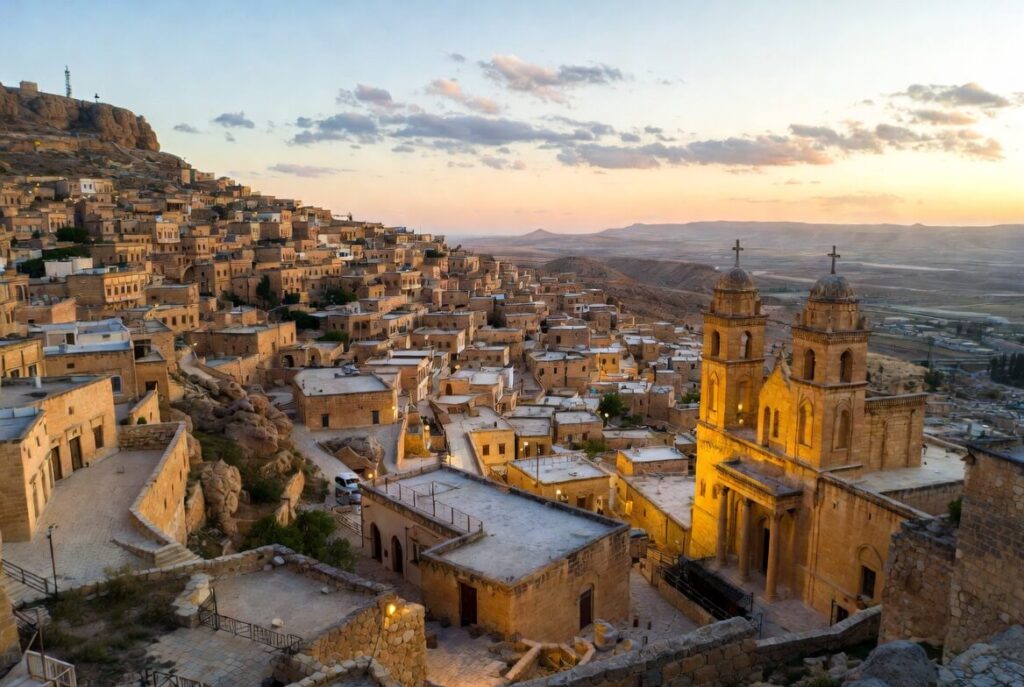
The niche traveler who arrives in Mardin at dawn, walks the golden-stone alleyways before the city wakes, eats a breakfast of dried herbs and fresh yogurt in a courtyard restaurant that has occupied the same building for three hundred years, and then drives south toward the Mesopotamian plain with the monastery towers of the Tur Abdin visible on the horizon — that traveler has encountered a Turkey that the brochures have never described and that most visitors never find.

This guide exists to make that encounter possible. Go slowly, listen carefully, eat with curiosity, and leave every place in better condition than you found it.

www.https://journeybyworld.com/europe/paris-travel-guide-2026/

Turkey Niche Travel — Curated for the Discerning Traveler

Thailand Travel Guide 2026 : Best Places, Budget, Food & Travel Tips

0
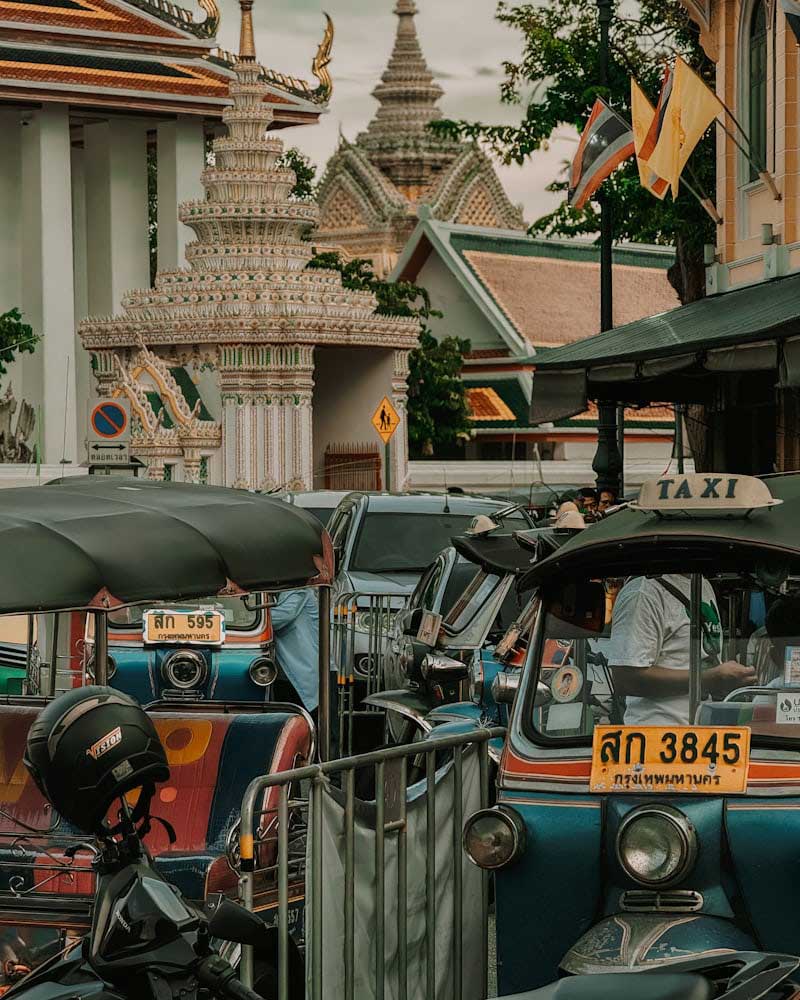
Thailand travel guide with beaches temples and city skyline

Thailand Travel Guide 2026: Everything You Need to Know Before You Go

From golden temples and tropical islands to street food heaven and vibrant nightlife ; here is your complete, no-fluff guide to planning the perfect Thailand trip.

Thailand travel guide with beaches temples and city skyline


  1. Why Visit Thailand?


Thailand is one of Southeast Asia’s most beloved travel destinations — and for very good reason. Whether you are a backpacker looking for adventure, a couple seeking a romantic getaway, or a family in search of culture and beaches, Thailand delivers on every front.

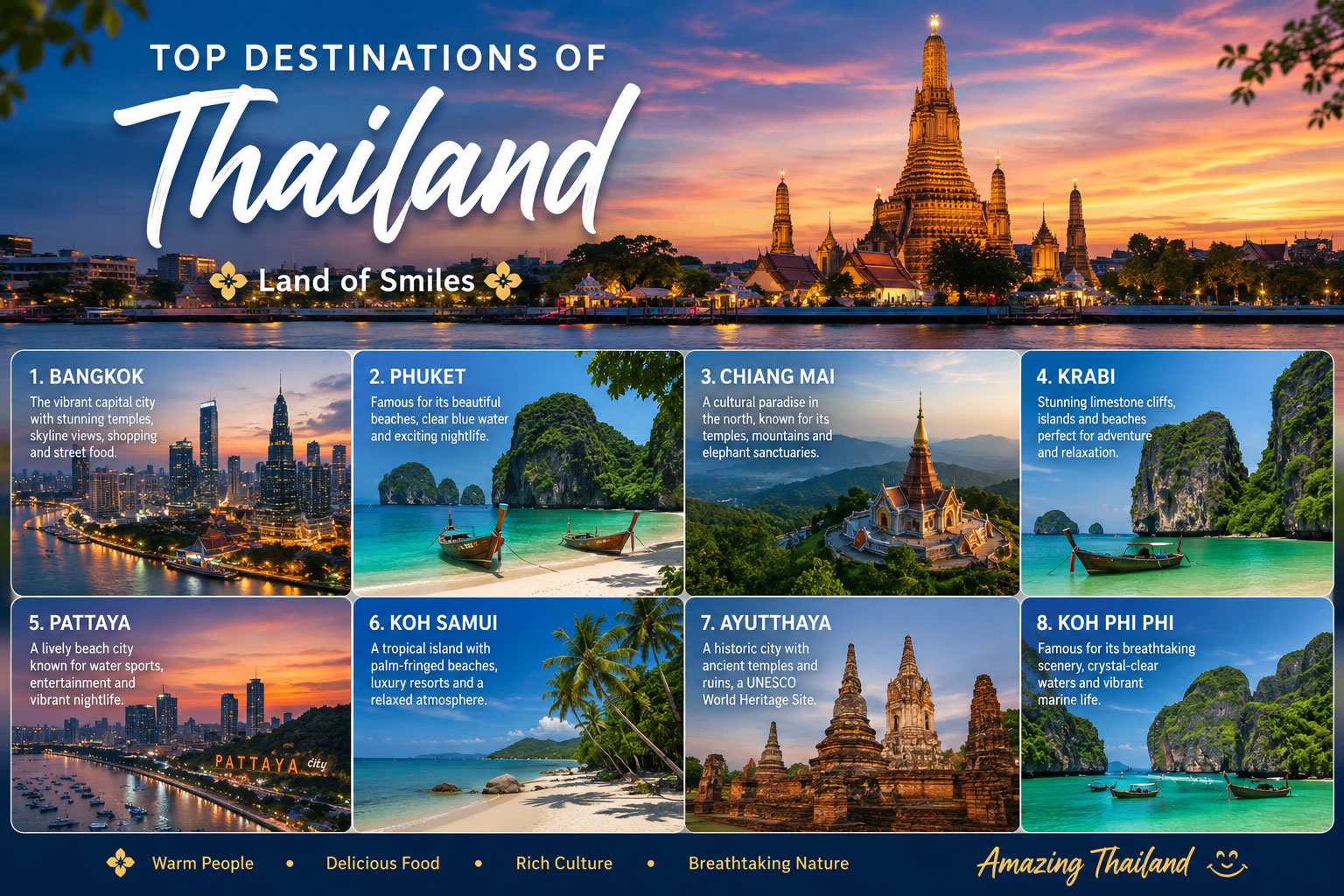
Few countries in the world can match Thailand’s combination of natural beauty, ancient history, world-class cuisine, and jaw-dropping affordability. You get temple-studded cities like Bangkok and Chiang Mai, impossibly clear waters around islands like Koh Samui and Koh Phi Phi, and a warmth from the Thai people that makes every traveler feel genuinely welcome.

Known as the “Land of Smiles,” Thailand has a deeply rooted culture shaped by Buddhism, royalty, and centuries of trade. It is a country where ancient traditions coexist with modern city life — where you can have a rooftop cocktail overlooking Bangkok’s glittering skyline at night and meditate in a silent mountain temple the next morning.

💡 Pro Tip Thailand is one of the most accessible countries for first-time solo travelers in Asia. English signage is common, transport is easy to navigate, and the locals are famously friendly and helpful.


  1. Best Time to Visit Thailand


Thailand has three main seasons: cool & dry, hot, and wet (monsoon). The best time to visit largely depends on which region you are going to — but in general, November through February is considered the golden window for most travelers.


Nov – Feb

Cool, dry, and sunny. Peak season. Best for beaches and temples.

Mar – May

Hot season. Great deals. Songkran (Thai New Year) in April is epic.

Jun – Oct

Monsoon season. Heavy rain on Gulf islands. North Thailand is fine.

The Andaman Coast (Phuket, Krabi, Koh Lanta) follows a different monsoon pattern from the Gulf of Thailand (Koh Samui, Koh Phangan). So if you visit during the wet season, you can often switch coasts and still find sunshine.


  1. Top Destinations in Thailand


Thailand travel guide with beaches temples and city skyline

Thailand is a big country with dramatically different regions — from the busy, electric capital to sleepy fishing villages. Here are the must-visit destinations worth building your itinerary around:

Bangkok

The chaotic, electrifying capital. Grand Palace, street food, rooftop bars, and world-class shopping.


Chiang Mai

Northern cultural hub. Ancient temples, elephant sanctuaries, night markets, and jungle treks.

Koh Samui

Gulf island with luxury resorts, beautiful beaches, and a great party scene at Koh Phangan nearby.

Phuket

Thailand’s largest island. Patong Beach nightlife, snorkeling, Phi Phi day trips, and stunning sunsets.

Krabi

Dramatic limestone cliffs, emerald water, and the gateway to Railay Beach — only accessible by boat.

Ayutthaya

Ancient capital just 90 min from Bangkok. UNESCO ruins, floating markets, and quiet canals.

A classic Thailand itinerary combines Bangkok for city life, Chiang Mai for culture, and one or two islands for beach relaxation. Two weeks is the sweet spot to experience all three without feeling rushed.


  1. Thai Food You Absolutely Must Try


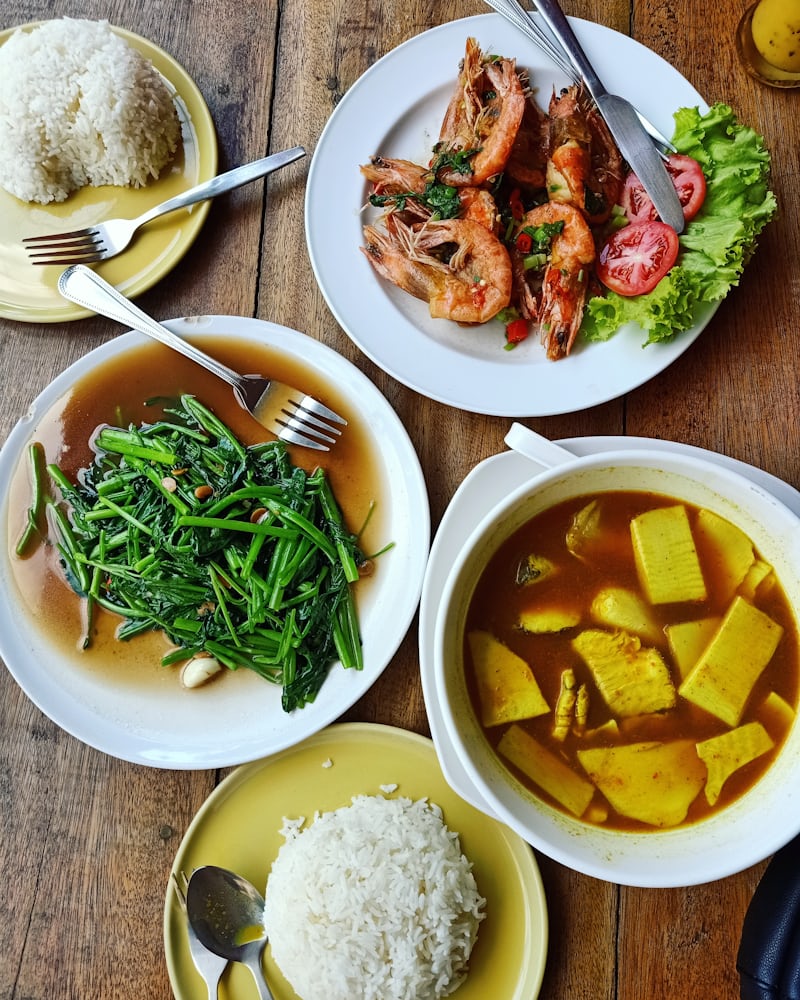
Authentic Thai street food in Bangkok Thailand

Thai cuisine is celebrated worldwide for its bold flavors — a perfect balance of sweet, sour, salty, and spicy. But no matter how good your local Thai restaurant is, nothing prepares you for eating in Thailand itself. Street food stalls open at dawn, fresh markets overflow with tropical fruit, and even a simple roadside bowl of noodles can be a transcendent experience.


Pad ThaiStir-fried rice noodles with egg, tofu or shrimp, tamarind sauce, peanuts

Green CurryCreamy coconut milk curry with Thai basil and vegetables or chicken

Som TumSpicy green papaya salad with lime, fish sauce, chilis, and peanuts

Tom Yum SoupHot & sour lemongrass broth with shrimp, mushrooms, and galangal

Moo PingGrilled pork skewers marinated in coconut milk and fish sauce

Mango Sticky RiceSweet sticky rice with fresh mango and coconut cream — iconic dessert

🍽️ Food Tip Eat where the locals eat. A plastic-chair street stall with a long queue of Thai people will almost always beat a tourist-facing restaurant at 10x the price. A full meal rarely costs more than 60–80 THB ($1.50–$2.25).


  1. Budget & Daily Costs in Thailand


Thailand is exceptionally affordable by global standards, though costs vary widely based on travel style and destination. Bangkok and the islands tend to be pricier than the north or rural areas. Here is a realistic daily budget breakdown:

CategoryBudget TravelerMid-RangeComfort / Luxury


Accommodation$8–$15 (hostel/guesthouse)$30–$60 (3-star hotel)$100–$300+ (resort)
Food$5–$10 (street food)$15–$25 (cafes + restaurants)$40–$80 (fine dining)
Transport$2–$6 (tuk-tuk/songthaew)$10–$20 (Grab/day trips)$30–$60 (private transfers)
Activities$5–$10 (temples, beaches)$20–$40 (tours, cooking class)$60–$150+ (private tours)
Daily Total~$20–$40~$70–$120$200–$600+

For a 2-week trip (flights excluded), a budget traveler can comfortably manage on $400–$600 total. A mid-range traveler should budget around $1,000–$1,600 for the same period. Read our dedicated Thailand budget travel guide for a complete cost breakdown.


  1. Getting Around Thailand


Thailand has an excellent and surprisingly affordable transport network that makes it easy to move between regions. Whether you want the overnight train experience or a quick domestic flight, you have options at every budget.


Transport Options

  • Domestic Flights — AirAsia and Bangkok Airways connect major cities cheaply. Bangkok to Chiang Mai from $25 one way.
  • Overnight Trains — Scenic, affordable, and fun. Bangkok to Chiang Mai is a classic 12-hour sleeper journey.
  • Long-Distance Buses — VIP buses are comfortable and cheap. Great for shorter regional routes.
  • Ferries & Speedboats — Essential for island hopping. Buy tickets at piers or through your guesthouse.
  • Grab App — Southeast Asia’s Uber equivalent. Use it in all major cities for honest, metered prices.
  • Songthaew — Shared red pickup truck taxis common in Chiang Mai and smaller towns.

⚠️ Watch Out Avoid tuk-tuks in Bangkok unless you agree on a fixed price beforehand. Many tourist tuk-tuk drivers work with gem shop or tailor commissions — politely decline any “free tour” offers.


  1. Thailand Visa Information


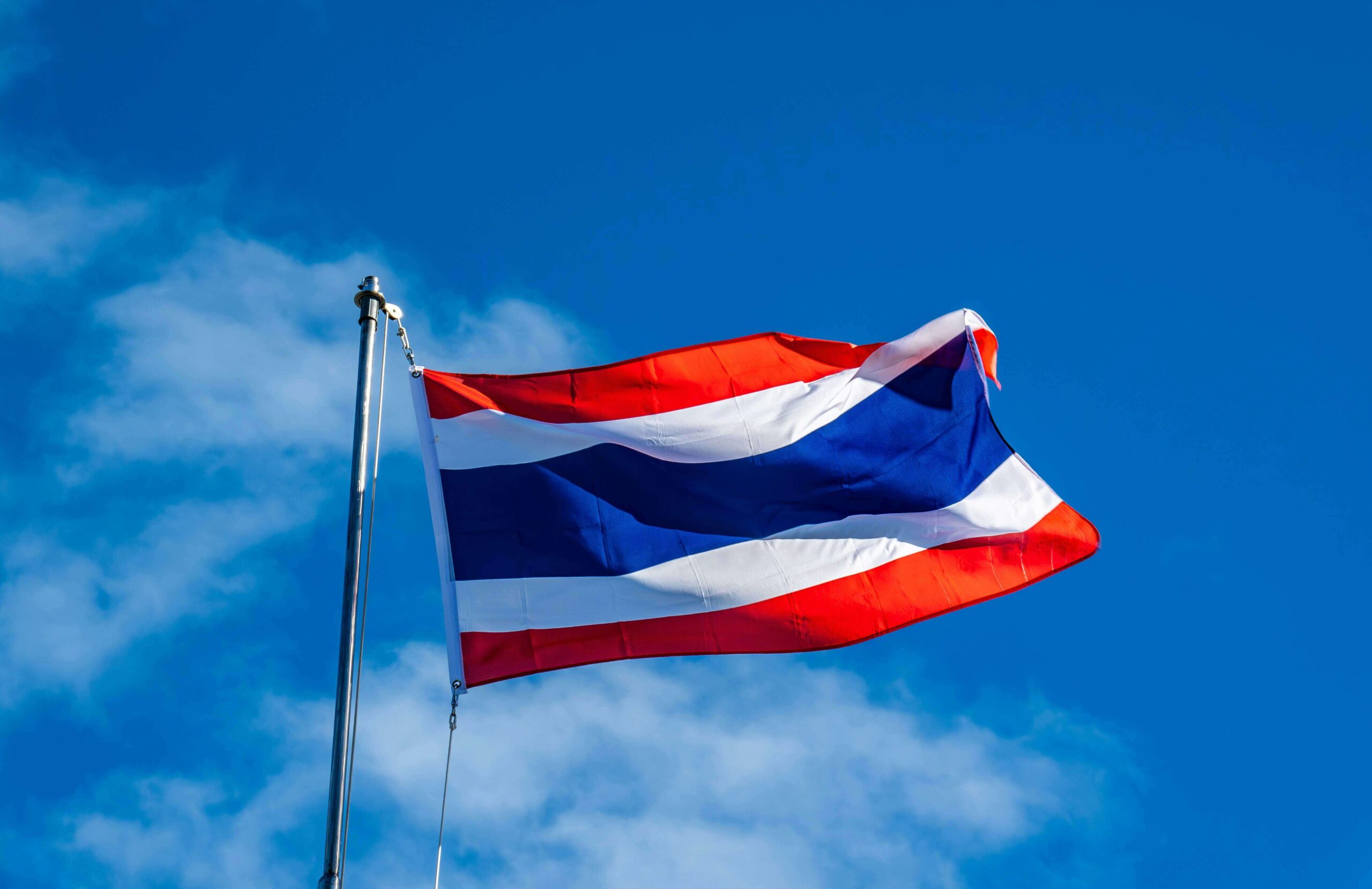
Thailand visa information for international travelers

Thailand is one of the most visa-friendly countries in Asia. Citizens from over 60 countries — including the US, UK, EU nations, Australia, and Canada — can enter Thailand visa-free for 30 days (extendable once to 60 days at immigration offices).

If you plan to stay longer, consider applying for a Thailand Tourist Visa (TR) before departure, which grants 60 days and can be extended once. For digital nomads and long-stay travelers, Thailand’s Destination Thailand Visa (DTV) launched in 2024 allows a 180-day stay and is an excellent option.

📌 Important Always enter Thailand by air if possible for visa-on-arrival. Land border crossings have stricter limits. Check the official Thai e-Visa portal for the latest rules before you travel, as policies update frequently.

For a full breakdown of all visa types, costs, and application steps, see our dedicated Thailand Visa Guide.


  1. Culture & Customs to Respect


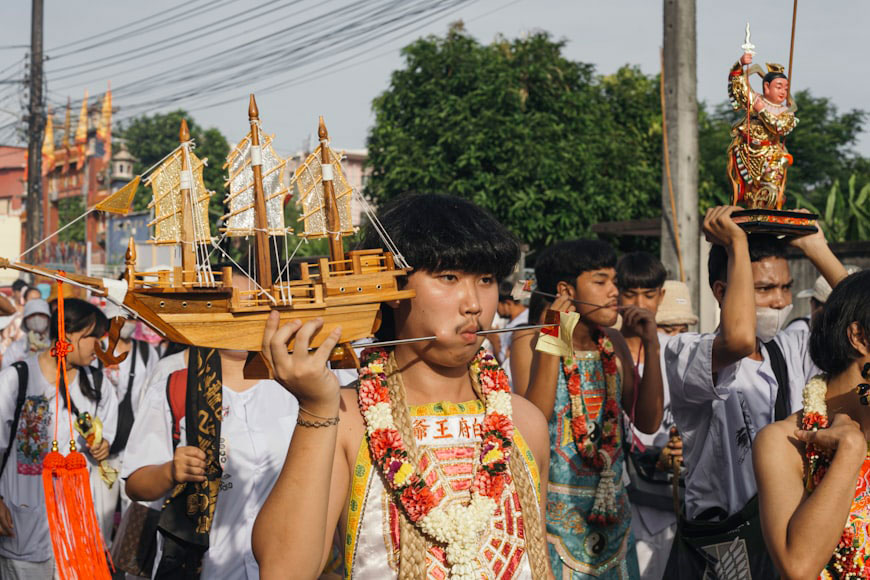
Thai culture and customs at Buddhist temple in Thailand

Thai culture is deeply rooted in Buddhism, respect for the monarchy, and a concept called “saving face” — maintaining dignity and avoiding public confrontation. Understanding and honoring these values will make your experience dramatically richer and your interactions with locals far more genuine.

  • Always remove your shoes before entering temples, homes, and many guesthouses.
  • Dress modestly when visiting temples — cover shoulders and knees. Sarongs are often available to borrow at temple entrances.
  • Never touch a Thai person’s head — it is considered the most sacred part of the body.
  • Do not point your feet at people, monks, or sacred statues. Feet are considered the lowest and least sacred.
  • The Thai Royal Family commands immense respect. Never make critical or disrespectful remarks — lèse-majesté laws are serious.
  • Greet people with a “wai” — press palms together at chest level and bow slightly. It is always appreciated.
  • Bargaining is normal in markets but always keep it light and friendly. A smile goes a long way.

  1. Safety Tips for Thailand


Thailand is generally very safe for tourists. Violent crime against visitors is rare, and millions of solo travelers — including solo women — explore the country without issues each year. That said, common-sense precautions apply, and a few Thailand-specific scams are worth knowing about before you arrive.


Key Safety Tips
  • Beware the “Grand Palace is closed today” scam in Bangkok — it is never closed. Tuk-tuk drivers saying so want commissions from shops.
  • Use only metered taxis or the Grab app. Always confirm the meter is running.
  • Do not ride motorbikes in busy city traffic unless you are experienced. Motorbike accidents are the top cause of tourist injury.
  • Keep a photocopy of your passport and store it separately from the original.
  • Travel insurance is essential — make sure it covers medical evacuation, which can be very expensive without it.
  • Drink only bottled or filtered water. Tap water in Thailand is not safe to drink.

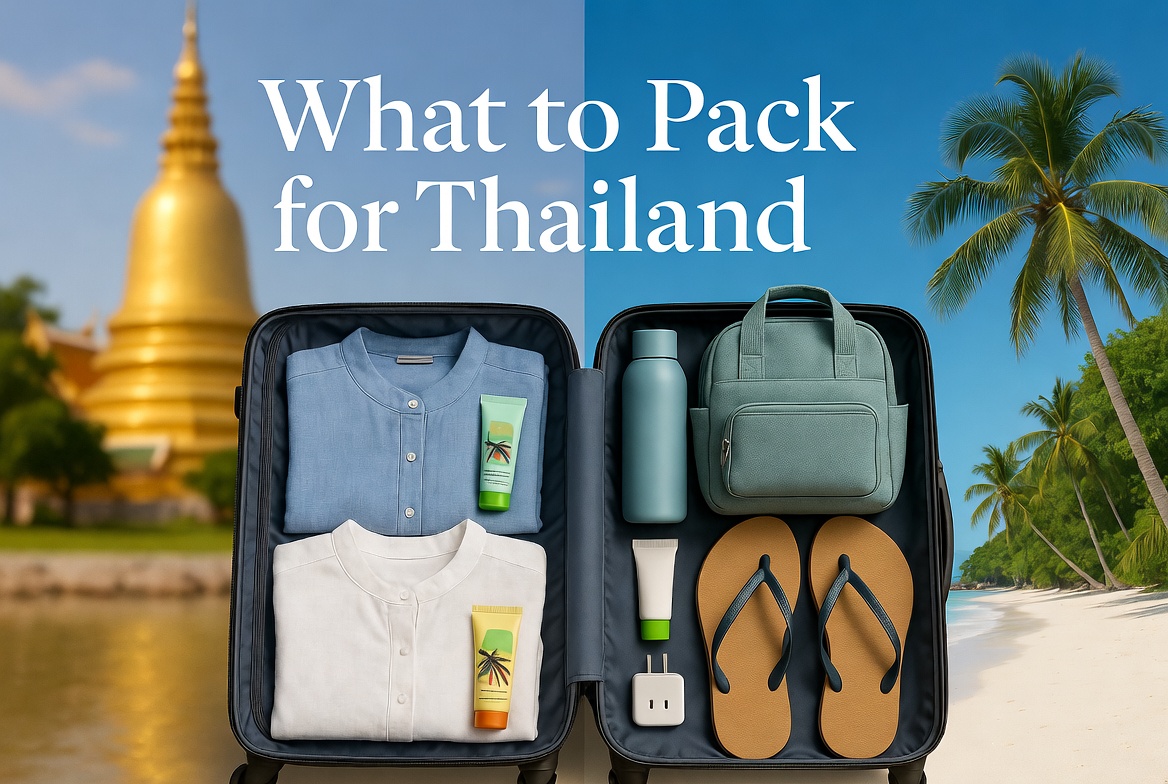
  1. What to Pack for Thailand


Essential packing list for traveling to Thailand

Thailand’s tropical climate and mix of urban, beach, and temple environments means you need a versatile, light packing list. Less is almost always more — you can buy almost anything cheaply in Bangkok or Chiang Mai if you forget something.

  • Lightweight clothing — breathable fabrics like linen or cotton. Avoid heavy denim in the heat.
  • Temple-appropriate outfit — at least one long-sleeve shirt and trousers or a long skirt for temple visits.
  • High-SPF sunscreen — UV is intense. Reef-safe formulas are better for island environments.
  • Mosquito repellent — essential, especially in jungle or beach areas at dusk.
  • Universal travel adapter — Thailand uses Type A, B, and C sockets.
  • Reusable water bottle with filter — reduces plastic waste and saves money long-term.
  • Small day bag or packable backpack — for market days, temple visits, and beach trips.
  • Flip-flops — you will take your shoes off constantly. Easy slip-on footwear is a must.

Ready to Explore Thailand?

Dive deeper into our Thailand travel series to plan every detail of your perfect trip.

💰 Budget Guide 🗓 10-Day Itinerary 🏝 Best Islands 🍜 Food Guide 📄 Visa Guide

Paris Travel Guide 2026: Best Attractions, Hotels, Food & Budget Tips

0
Eiffel Tower at sunset with golden sky in Paris France

Paris Travel Guide 2026

The Ultimate, In-Depth Guide to the City of Lights for First-Time & Repeat Visitors

Paris travel guide 2026 featuring Eiffel Tower and Seine River

Why Visit Paris in 2026?

Paris is not just a place to visit—it’s a place you experience, absorb, and remember. Known around the world as the ‘City of Light,’ the French capital continues to redefine what it means to be a world-class destination. In 2026, Paris stands at a fascinating intersection of history and modern innovation. With major infrastructure improvements following the 2024 Summer Olympics, the city is now more accessible, eco-conscious, and traveler-friendly than ever. 

From romantic strolls along the Seine to the vibrant café culture of neighborhoods like Saint-Germain, Paris offers a rare blend of timeless elegance and contemporary living. Whether you’re traveling for art, food, fashion, or just for its ambiance, Paris offers an experience that’s more than just sightseeing—it’s about feeling.

 Best Time to Visit Paris (Detailed Guide)

Choosing the right time to visit can shape your entire Paris experience. Each season offers a different personality.

 Spring (April–June)

Spring is arguably the most magical time of year in Paris. The city is awash with color, especially in famous green spaces like the Luxembourg Gardens. The weather is pleasant, perfect for long walks, café hopping, and taking photos. Expect moderate crowds and a lively, optimistic atmosphere.

 Summer (July–August)

Summer brings excitement, festivals and longer days. The streets are filled with music, art and outdoor dining. However, it is also the high season for tourism. Long lines can be seen at major attractions such as the Eiffel Tower. Booking in advance is essential.

 Fall (September–October)

Autumn brings a calm and sophisticated experience to Paris. The weather cools down, the crowds thin out, and the city takes on a golden glow. It’s the perfect time for museum visits, cultural exploration, and leisurely strolls.


Winter (November–February)

Often overlooked, winter has its own charm. Paris becomes festive with Christmas lights and markets. Hotels are relatively affordable and the sights are less crowded. It is perfect for those looking for a relaxing and budget-friendly experience.

 Top Attractions in Paris (Pro-Level Guide)

Paris is filled with world-famous landmarks, each telling its own story.

Eiffel Tower

Eiffel Tower at sunset with golden sky in Paris France

The Eiffel Tower is the symbol of Paris and one of the most recognizable structures in the world. Standing at 330 meters, it offers breathtaking views of the city.

Pro Tips:

  • Visit during sunset and stay until nightfall for a magical transformation
  • Climb to the second floor to skip elevator lines
  • Best photo spots: Trocadéro Gardens, Seine riverside

Visit official Eiffel Tower website for ticket info.

Eiffel Tower Official

 Louvre Museum

Traditional French desserts and pastries in Paris cafe

The Louvre Museum is the largest art museum in the world, housing over 35,000 works of art.

Must-See Masterpieces:

  • Mona Lisa
  • Venus de Milo

Plan at least 3–5 hours, though even a full day may not be enough. Enter through Carrousel du Louvre for shorter queues.

 Notre-Dame Cathedral

Street food and fresh crepes sold in Paris France

The famous Notre-Dame Cathedral has reopened after renovations and is welcoming visitors. Its Gothic architecture, stained glass work, and historical significance make it a must-see.

Sacré-Cœur à Montmartre

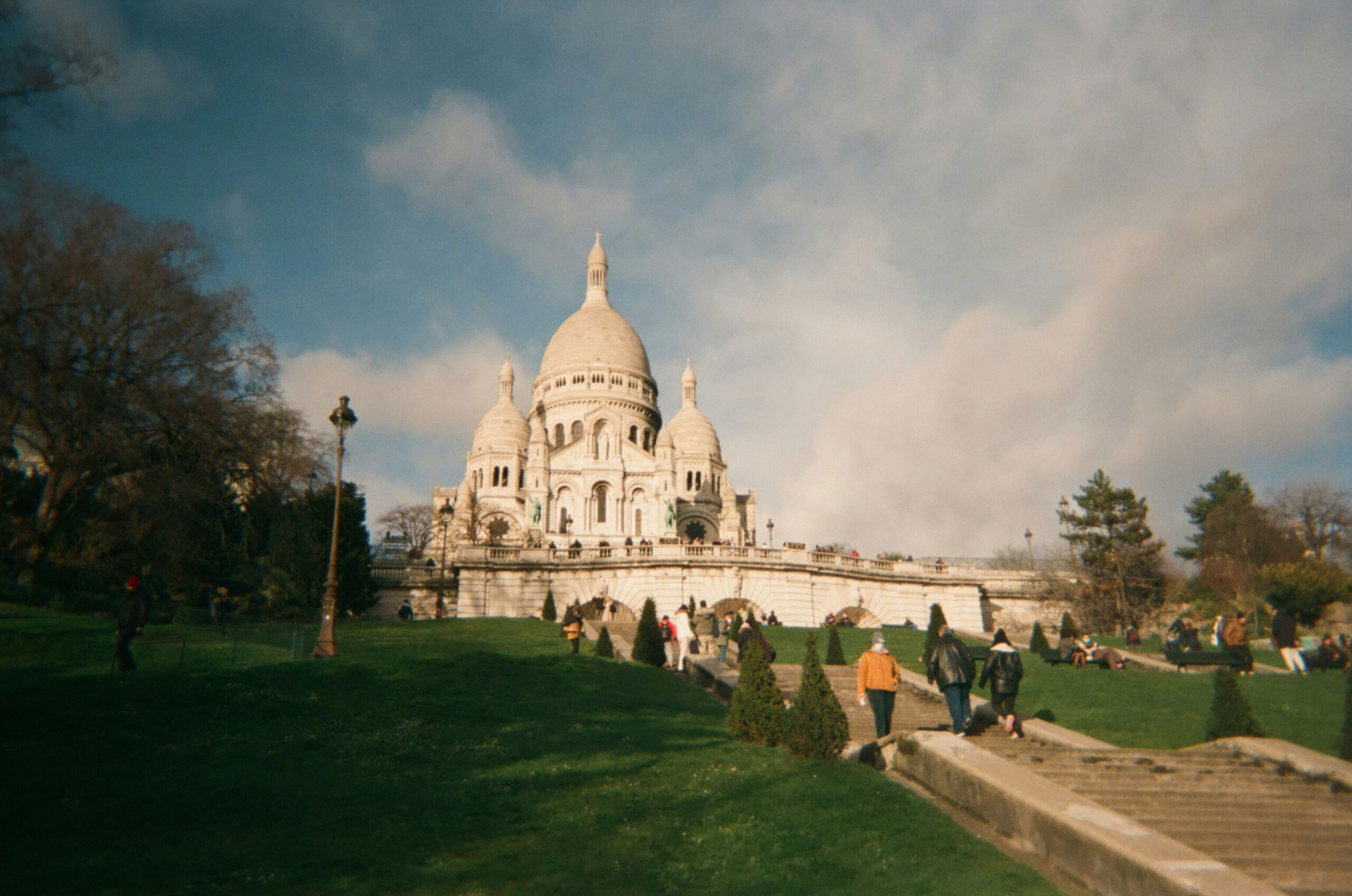
The Sacré-Coeur Basilica, located at the highest point of the city, offers panoramic views of the surrounding area. The surrounding district of Montmartre is known for its artistic history, charming streets, and lively squares like Place du Tertre.


Seine River Cruise

A cruise along the Seine River is one of the best ways to explore Paris efficiently. Evening cruises are especially beautiful, where the illuminated sights create a cinematic experience.


 Hidden Gems & Unique Experiences

Beyond the famous landmarks, Paris has countless hidden treasures:

  • Canal Saint-Martin – A trendy, relaxed area with fewer tourists
  • Le Marais – Historic streets mixed with modern boutiques and nightlife
  • Latin Quarter – Student-friendly, lively, and budget-friendly
  • Rue Cler – A food lover’s paradise with authentic Parisian markets

These areas offer a deeper, more local perspective of Paris.

 Where to Stay in Paris (Area + Strategy)

Choosing the right neighborhood can significantly enhance your trip.

💎 Luxury تجربة

  • Hôtel Plaza Athénée
  • Shangri-La Paris
  • Four Seasons Hotel George V

These offer world-class service, iconic views, and premium comfort.

Mid-Range (Best Value)

  • Saint-Germain-des-Prés – Classic Paris charm
  • Le Marais – Central and lively
  • CitizenM Paris – tech-savvy and stylish

 Budget Options

  • Latin Quarter hostels
  • Montmartre guesthouses

✔️ Pro Tip: Always stay near a metro station for convenience.

 Paris Food & Culinary Experience

Paris is one of the world’s greatest food capitals. Every meal—no matter the budget—can be exceptional.

 Must-Try Foods

  • Croissant
  • Escargot
  • Coq au Vin
  • Crème brûlée

 Culinary Experiences

  • Wine tasting in traditional cellars
  • Cooking classes with local chefs
  • Street crêpes near tourist hotspots

 Famous Dessert Spots

  • Ladurée
  • Pierre Hermé

 Getting Around Paris (Detailed)

Transportation in Paris is efficient and easy to navigate.

  • Main airport: Charles de Gaulle Airport
  • RER trains connect the airport to the city center

Transport Options:

  • Paris Metro – fast and affordable
  • Buses – scenic and slower
  • Vélib bikes – eco-friendly and flexible

Apps like Uber and Bolt are also widely used.

✔️ Best option: Navigo Easy or weekly pass

 Budget Planning (Realistic Breakdown)

Category Daily Cost
Budget €70–120
Mid-Range €150–250
Luxury €400+

✔️ Save money with the Paris Museum Pass and early bookings.

 Sustainable Travel in Paris

Paris is becoming a leader in eco-tourism. Initiatives include:

  • Free public drinking water stations
  • Expanded cycling infrastructure
  • Eco-certified hotels

Walking is not only sustainable—it’s the best way to experience the city.

 Safety & Travel Etiquette

  • Be cautious of pickpockets near major attractions
  • Always greet with “Bonjour” before speaking
  • Maintain a respectful tone—Parisians value politeness

 Best Day Trips from Paris (Expanded)

 Palace of Versailles

The Palace of Versailles is a UNESCO World Heritage Site known for its grandeur and vast gardens.

 Mont Saint-Michel

A breathtaking island monastery rising from the sea, the Mont Saint-Michel feels almost surreal.

 Loire Valley

Famous for castles, vineyards, and scenic beauty.

 Disneyland Paris

Disneyland Paris is ideal for families and entertainment lovers.

 Giverny

Visit the home and gardens of Claude Monet, inspiration behind his iconic artworks.

📝 Final Thoughts.

Paris is a city that rewards slow travel.

Skip the rush—sit at a café, walk through hidden streets, and let the city reveal itself.

Because in Paris, you don’t just visit—you belong, even if only for a moment.

Bali Travel Guide 2026: Best Hidden Gems & Budget Tips

0

Bali Travel Guide 2026 

Hidden Gems, Luxury Escapes, Budget Hacks & Real Travel Insights

Why Bali Still Dominates Global Travel in 2026

Bali is not just a destination — calling it that would be an understatement. It is an invitation to experience a complete lifestyle. Even in 2026, Bali continues to hold its top position in global travel trends because it offers a rare combination of affordability, cultural depth, natural beauty, and modern living — something that is very hard to find elsewhere.

From solo travelers to honeymoon couples, digital nomads, content creators, and family vacationers, everyone is drawn to Bali because of this extraordinary blend:

In Bali, you can enjoy a high-quality lifestyle experience at an incredibly low cost.

Compared to other tropical destinations, Bali is exceptionally diverse. In just a single trip, you can explore:

  • Volcanic mountains
  • Breathtakingly beautiful emerald green rice terraces
  • Stunning white and black sand beaches
  • Historic ancient temples
  • Modern beach clubs

Key Insight: The beauty of Bali is incomparable, yet it is one of those rare places where you can enjoy a $3000 lifestyle on a $1000 budget — something beyond your imagination.

Best Places to Visit in Bali (2026 Must-Explore)

Ubud – The Soul of Bali

Ubud represents the spiritual and cultural heart of the island. Surrounded by jungle and rice fields, it offers a peaceful escape from busy city life.

  • Tegalalang Rice Terrace — one of the most iconic landscapes in Southeast Asia
  • Sacred Monkey Forest Sanctuary — a unique wildlife experience
  • The Yoga Barn — globally recognized wellness center

Ubud is perfect for:

  •  Presence of writers, artists, and creative individuals
  •  The frequent visits of spiritual seekers and yoga enthusiasts
  •  A preferred destination for those who love slow-paced, meaningful, and experiential travel.

Uluwatu Temple cliff sunset ocean view

Canggu – Digital Nomad Capital

Canggu can now rightly be called one of the most vibrant and dynamic areas in Bali. Many people refer to it as the “Silicon Valley of Bali”. Here, productivity and a relaxed, comfortable lifestyle have blended together seamlessly, creating beautifully scenic and harmonious envirrestaurants. 


  • Co-working spaces and a thriving startup scene
  • Surf-friendly beaches
  • Trendy cafes and vegan restaurants
  • Finns Beach Club — the ultimate luxury sunset destination

Canggu is ideal for:

  • Remote workers and freelancers
  •  Young adventure seekers and entrepreneurs
  •  Those who enjoy social connections and networking

Bali Travel Guide 2026 showing beaches temples and tropical landscape

Uluwatu – Luxury Cliffside Escape

Uluwatu is home to some of the most breathtaking and mesmerizing landscapes in Bali. Dramatically situated on towering limestone cliffs above the ocean, it offers a perfect harmony of luxury and nature — a place that feels like a true paradise.

  • Uluwatu Temple — dramatic sunset views
  • Traditional Kecak Fire Dance — cultural performance at dusk
  • World-class surfing beaches

Perfect for:

  • Honeymooners
  • Photographers
  • Luxury travelers

Hidden Gems (Low Competition, High Value Experience)

For a deeper and less crowded experience, explore these:

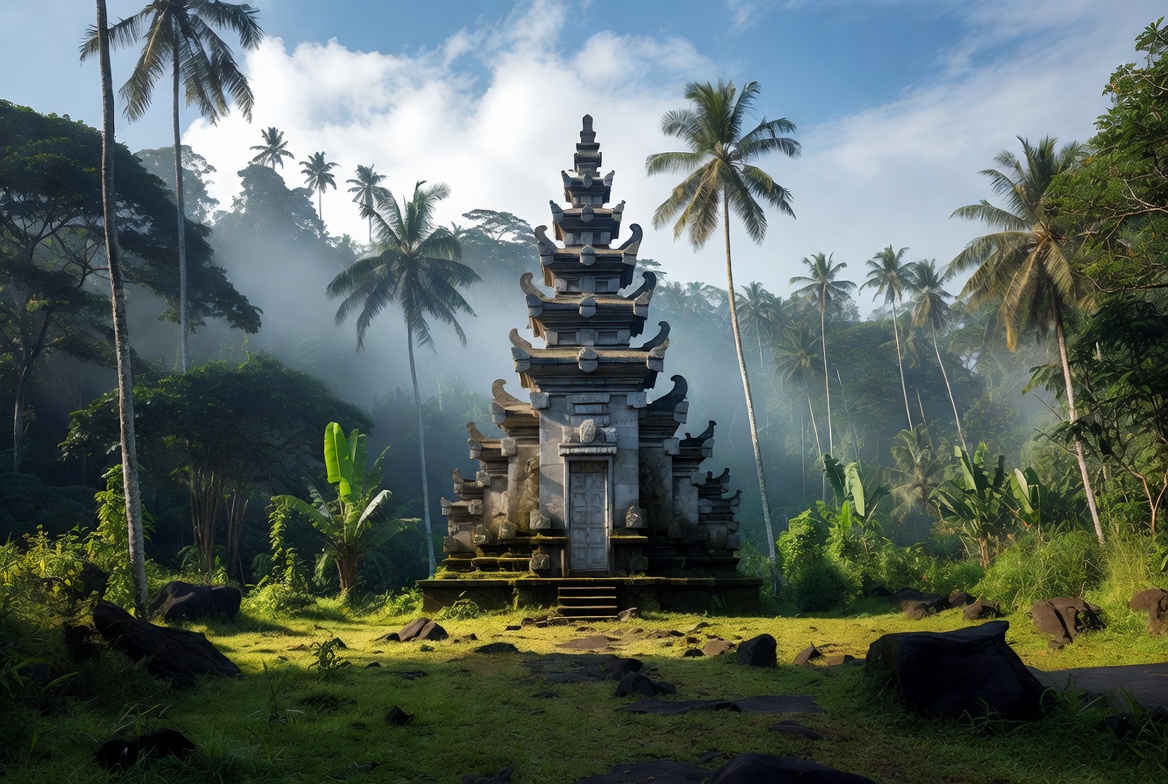
  • Sidemen Valley📍A beautiful serene countryside valley filled with lush rice fields, where breathtaking natural scenery unfolds every waterfall 
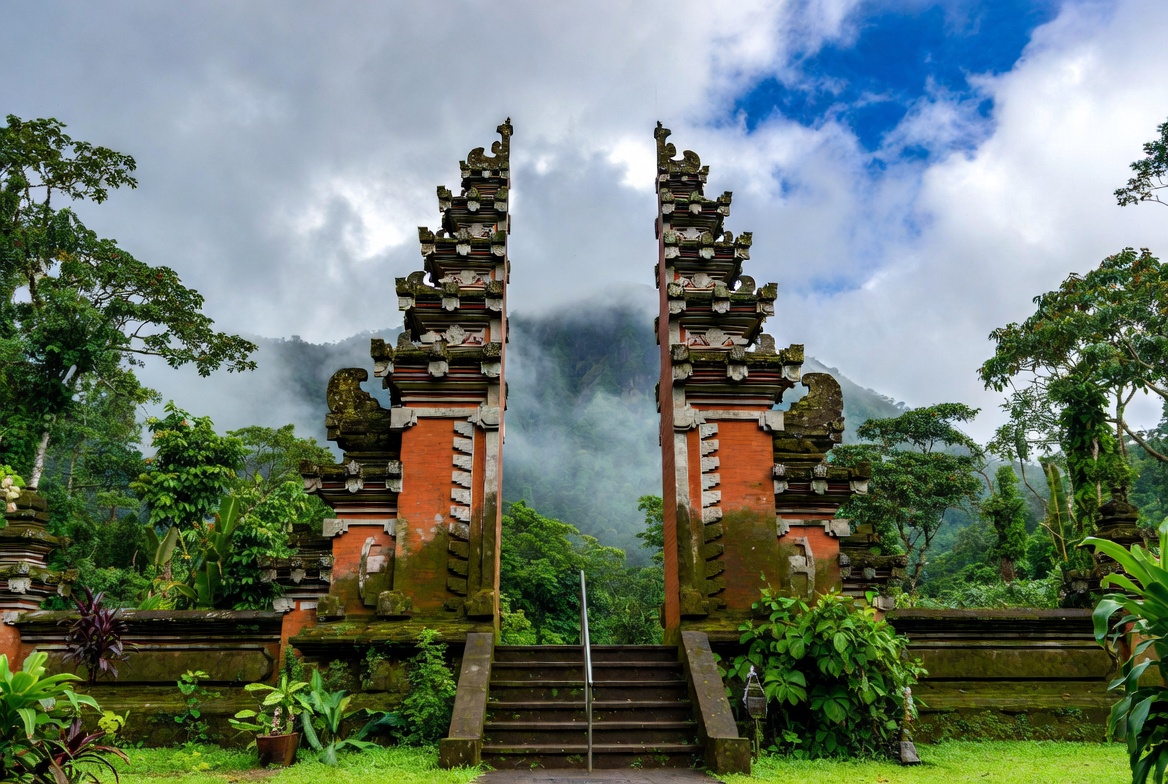
  • Lempuyang Temple📍The famous “Gates of Heaven” temple, built in traditional Balinese architectural style and widely known for its iconic split gate view.
  • Tukad Cepung Waterfall📍 Tukad Cepung Waterfall — A mysterious waterfall hidden inside a cave, creating a magical beam of light and an otherworldly atmosphere.

These beautiful areas are perfect for creating unique content and enjoying freely as much as you like, making great videos and experiences.

Sidemen Valley Bali peaceful rice fields

Best Time to Visit Bali (Smart Planning Guide)

Season Months Experience
🌞 Dry Season April – October Best for travel, photography, outdoor activities
🌧️ Wet Season November – March Lower prices, fewer tourists

Best Months to Visit: May, June, September
(Perfect balance of weather, crowd, and cost)

Bali Travel Budget Guide (Realistic Breakdown)

Bali is flexible for all types of travelers:

Travel Style Daily Budget What You Get
🧳 Budget $25–$50 Hostels, local food, scooters
🏝️ Mid-range $50–$120 Private villas, cafes, tours
💎 Luxury $150–$500+ Resorts, spas, beach clubs

Bali offers one of the best travel experiences in the world, which is rare globally.value-for-money travel experiences globally.

Insider Travel Hacks (Save Money + Travel Smart)

 Try using Grab and Gojek for transportation

Keep an international card or Wise for better exchange rates


If experienced, you can enjoy renting a scooter for flexible travel


It is better to avoid overpriced airport taxis


Carry a reusable water bottle for eco-friendliness and cost savings


i hope these tips will help reduce your total travel cost by 30–40%, making your trip more rewarding and worthwhile.


What to Eat in Bali (Food Experience Guide)

Food is a big part of Bali’s charm:

  • Nasi Goreng — traditiona popupork  fried rice
  • Babi Guling —  a tasty Balinese signature roast pork
  • Sate Lilit —delicious coconut-infused satay
  • Fresh coconut drinks everywhere

 For an authentic taste and affordable meals, turn to local warungs.


Instagram & Viral Travel Spots

For content creators and social media lovers:

  • 📍 Scenic Handara Gate
  • 📍  Stunning Campuhan Ridge Walk
  • 📍 Unique Kelingking Beach

These scenic spots enrich engagement, boost shares, and enhance blog traffic

⚠️ Common Mistakes to Avoid

  • ❌ Staying in only one area
  • ❌  Not following temple dress codes
  • ❌  Planning your trip in a restricted, overly
  • ❌  Not caring about the time it takes to travel from one place to another

Smart travelers balance planning + flexibility

Final Verdict

 Bali is not just limited to a single trip — it is a diverse and enriching experience.


It allows you to:

  • Relax and reconnect with you 
  • budget Explore and connect with diverse cultures
  •  Enjoy a luxurious lifestyle on a budget
  •  Build connections for a global lifestyle

👉  If you want to visit just one destination at present, you can undoubtedly place Bali at the top of your list.

Why Is My Dog Not Eating? Common Causes & What You Should Do

0

Why Is My Dog Not Eating? Causes, Solutions & When to Worry

It’s always stressful when your dog suddenly refuses food. One day they’re excited for mealtime, and the next they’re ignoring the bowl completely.

The good news? In many cases, it’s temporary.
The not-so-good news? Sometimes it can signal something more serious.

Here’s how to tell the difference — and what you can do about it.

Common Reasons Dogs Stop Eating

1. Stress or Changes at Home

Dogs are sensitive. Moving to a new place, loud noises, guests, travel, or even a new pet can affect their appetite.

2. Sudden Food Change

If you recently switched dog food, that could be the reason. Dogs need gradual transitions. Switching too fast can upset their stomach.

3. Dental Pain

Would you want to eat with a toothache? Swollen gums, broken teeth, or mouth infections can make chewing painful.

4. Upset Stomach

Vomiting, diarrhea, or mild nausea can make your dog avoid food temporarily.

5. Illness or Infection

Fever, parasites, or internal infections often reduce appetite. In this case, appetite loss is usually paired with other symptoms.

6. Too Many Treats

If your dog gets lots of snacks or table scraps, regular meals may seem less interesting.

How Long Can a Dog Go Without Eating?

Healthy adult dogs can technically survive a few days without food, but that doesn’t mean you should wait that long.

  • Adults: More than 24 hours without food → monitor closely
  • Puppies: 12–24 hours → contact a vet
  • Seniors: Don’t delay checking with a vet

If your dog refuses food for more than a day and seems tired or sick, call your veterinarian.

Dog Not Eating but Drinking Water

If your dog is still drinking water, that’s a positive sign. It means they’re not dehydrated yet.

This situation often points to:

  • Mild nausea
  • Stress
  • Minor digestive issues

Still, if they continue refusing food beyond 24 hours, it’s best to seek advice.

Dog Not Eating but Acting Normal

Sometimes dogs act completely fine — playing, running, behaving normally — but still ignore their food.

Common reasons:

  • Picky eating habits
  • Waiting for “better” food
  • Getting too many treats

What helps:

  • Feed at the same time daily
  • Remove the bowl after 15–20 minutes
  • Avoid offering alternatives

Most dogs start eating normally within a day or two.


Dog Not Eating and Vomiting

This is when you need to be careful.

Vomiting combined with appetite loss may indicate:

  • Food poisoning
  • Parasites
  • Infection
  • Blockage

If vomiting continues, contains blood, or your dog seems weak — don’t wait. Visit a vet immediately.

Puppy Not Eating – Don’t Ignore It

Puppies are more fragile than adult dogs. They can become weak or dehydrated quickly.

If a puppy skips:

  • 12 hours → monitor closely
  • 24 hours → vet visit is recommended

With puppies, it’s always better to be safe than sorry.

Simple Home Remedies You Can Try

If your dog seems otherwise healthy, you can try:

Boiled chicken and rice – Gentle on the stomach.
A small amount of wet food – Stronger smell may encourage eating.
Plain scrambled egg – Easy to digest.
Vet-approved probiotics – Helpful for mild digestive issues.

Introduce anything new slowly and in small portions.

Warning Signs You Should Never Ignore

Get medical help immediately if you notice:

  • Swollen or hard belly
  • Constant vomiting
  • Bloody stool
  • Extreme tiredness
  • Pale gums
  • Fast or difficult breathing

These can indicate serious conditions that require urgent care.

How to Prevent Future Appetite Problems

  • Keep a consistent feeding schedule
  • Avoid sudden food changes
  • Don’t overdo treats
  • Maintain dental care
  • Schedule regular vet checkups

Final Thoughts

If your dog isn’t eating, don’t panic right away. Many cases resolve within a day.

But if the behavior continues, or if other symptoms appear, it’s important to take it seriously. Your dog can’t tell you what’s wrong — so paying attention to small changes makes a big difference.

When in doubt, always trust your instincts and consult your veterinarian.

Rio Negro Amazon Guide: Source, Wildlife, Navigation & 8-Day Jungle Expedition

0
A breathtaking view of the Rio Negro River in the Amazon rainforest, symbolizing both fear and excitement of nature.
Rio Negro River Fear and Excitement in the Amazon

Rio Negro Amazon Guide: Wildlife, Black Waters & Jungle Expedition


While looking up to geographical map, we understand, that the best way to explore Amazon is to surf its river system. The Rio Negro is the largest tributary to the left bank of Amazon river system. It is also one of the most significant river in whole Amazonia, in South America, bathing three countries, Colombia, Venezuela and Brazil and runs through 1700 km.

Also it is the longest black water river in the world, and second largest by volume of water, except Amazon itself. In some extent we say, that Amazon collects many rivers, it itself is a collection of rivers. Contribution of Rio Negro is one of the biggest. It is enough to say that there are more than 20 tributaries more than total 1500 km long. The black water hides thousands of islands at flooding time, revealing them in dry seasons. Even being dark, waters in Rio Negro have transparency upto 1.3 to 2.3 meters. A separate attraction for thousands of tourists who visit Amazonia, is this longest tropical river in the world.

The amazonians love too cool off on weekends on thousands of beaches in the Manaus city during summer, but foreign tourists often do not have idea about the exciting adventures, hiding on the banks of Rio Negro. There are many curiosities about Rio Negro from the springs of the clear waters, passing through the mysterious meeting of the waters, to emptying into the salty endlessness of Atlantic Ocean. Many amazing fish and most incredible creatures live in Rio Negro, like leaf fish, which is impossible to see among the water full of tree leaves. On the other hand, red neons stay in their bright color, and become easy prey. The matamata turtle also has features and habits separate from all other turtles in the world. Describing all of this is not quite enough until you do not see with your own eyes.


The Source of Rio Negro

The Rio Negro takes birth in Serra de Junai, in Colombia, where it is called the Guania river, at about of 1600 meters of altitude, and this name comes from outcrop of the clear ground water. Every year the rivers of Amazon basin flood and ebb, and one of those responsible for this phenomenon is the thaw that takes place in Andes Mountains. Allied to the rainy season, the Rio Negro waters reach a very high level. According to the researchers, the peak of Rio Negro flood happened in 2012 with 29.97 meters high level. In Manaus records, it was the first time since the great flood of 1902. 

Why Rio Negro Waters Are Dark ?

This has been a subject of speculation for 200 years by the scientists, and it was only in the 1980s that the answer came through American scientist Jerry A. Leenheer. The waters of all rivers are generally dependent on chemical and physical interactions, such as infiltration and runoff, with the extensive land drainage areas adjacent to them.

The black waters of Rio Negro and its effluents have pH values between 3.8 and 4.9 and therefore being acidic. This is due to large amount of dissolved organic substances from the drainage of sandy soils adjacent to the river, near rich Amazonian biome. This color is result of humic and fulvic acids, which is result of slow decomposition of humus in the soil and mix up with river waters. Visibility varies between 1.5 to 2.5 meters. Due to pH level insects do not proliferate and there are almost no mosquitos near Rio Negro.


Navigability Conditions on Rio Negro

The Rio Negro is navigable for 720 km above its mouth, and can have a minimum of 1 meter of water during drought. But there are many sandbanks and other minor difficulties. It overflows in the rainy season. Flooding reaches over the banks from 32 to 240 km. 

Main Villages

In the channel of Rio Negro there are about 70 different communities between inside islands and streams. Main villages are Macapuru, Iranduba, Novo Airao.


Rio Negro Journey: A Regular Program for 8 Days

All the tour operator agencies usually follow the more less same pattern of program for tour the Rio Negro. We can summarize this to a common program pattern, which is as follows.

  • Travel in dug-out canoes on the Rio Negro and its tributaries, hike and camp along the Curicuriari river.
  • Rainforest trekking far off the beaten tracks discoveries in the deep rainforest
  • Visiting native tribes and congregate
  • Exploring all the rivers both big and small with canoe
  • Wildlife observation
  • Introduction to the Amazonian rainforest flora and the planet’s greatest biodiversity
  • Survival technics
Day 1

Visiotrs arrive to Sao Gabriel da Cachoeira, where a guide shall wait for them. Before visiting native tribes territory, government permission is needed. Boarding a motorized dig—out canoe, the travel begins through strong current and treacherous rapids near Sao Gabriel da Cachoeira. First native tribal settlement will appear after 2 hours of journey by Rio Negro. It is called Sao Jorge and is located at the mouth of Curicuriari river. The tribe here speaks Tukano language and is quite welcoming to tourists. The chief here is called captain and tourists have custom to grant him some gift. Then the surroundings can be explored. Then the journey continues up the Curicuriari river for nearly 3 hours, reaching Camp 1 or Tumbiara village. The whole path can be enriched with photo shoots and observation of nature around. At the reaching point visitors supposed to be tired, so they should stop here, have dinner and spend night on hammock in the rainforest. 

Day 2

The native tribes up Rio Negro are well organized and rely on farming, fruits cultivation and fishing. After breakfast in Tumbiara village, tourists take canoe and plung to rainforest for discoveries. The temporarily flooded areas are called igarape. The small rivers and surrounding are full of wildlife. There are giant otters, anaconda and many kinds of monkeys. Tourists here can catch fish for lunch. Next comes the exploring of the forest. There is abundance of plants everywhere including many medically valued trees, without which modern medicine would not be possible. After sunset visitors should ride the canoe back to the village. The guides shall prepare dinner on open fireplace. 

Day 3

Right after the breakfast should begin the journey down Curicuriari river until reaching the first clay lick. It is about 3 hours of ride up the river Cariua, where camping should be made near Piranhauara waterfall. Refreshing bath there is another enjoyment. Photo shoot opportunities are great. Next should be trip by old trail, that was used by native tribes to carry large fruit amounts, especially Piacaba, that reached all markets in Brazil. Tourists can also collect those. Guide will show us how to build palm tents for temporary stay. Back at the camp hammocks are ready for rest, while open air dinner is prepared. Sitting around the fireplace and listening to exciting wildlife stories from the natives is another bliss.

Day 4

This day should be spent on hiking towards parrot clay licks. This destination is deep inside the jungle and the hike may take up to 8 hours. During breaks the guides explain the medical plants and their use, show various trees and their usefulness. The most interesting are the liana that are used for making quinine. Here the camping will be near the clay lick, and visitors can observe the parrots with binoculars. 

Day 5

Since the path too long, the team stays there, near parrots clay licks. The movement shall go further to even deeper jungle to the clay walls, where even the native tribes do not dare to explore. This day should be spent on observation of various parrot species like ararauna and colorful macaw. The constant arrival and departure of the birds provide spectacular scene. Return to the camp to spent time overnight.

Day 6    

After the breakfast the camp is broken down and the team moves back to Cariua igarape, where the canoe is anchored. Next moving by canoe to cariua downstream until reaching Curicuriari river. The trip will be to the starting point of the trail, that leads to famous hill “Sleeping Beauty”. At Arabu igarape a small waterfall awaits. This is also an ideal camping place for the night. At camp side the guides prepare a drink from saracura mira roots that cleanses all the organs in the body and to relief chest pains. This quite a lengthy process that starts with scrapping the shavings of the root to a pan, adding water and whisking strongly with another root used as spin whirl. The process is going on until it foams. This is repeated four times. Then the foam is removed and it is suitable to drink, which at first seems bitter, but the taste improves with more drinking. It is also very healthy. At night the team can walk around in the forest, exploring the slightly scary surroundings. There are chances to meet jaguar or other nocturnal animals.

Day 7

A tough and adventurous 4 hours hike will lead to the famous “Sleeping Beauty” hill. At foothold of it the camp will be set. The hill outlook resembles a sleeping woman. The rest of the day should be spent exploring the surroundings with help of guides. Many rare and endemic plants can be found here. Photo sessions among the myriad of wild flowers will be an exciting experience. The best time for this is between February and March and also November. Since the hike to the hill peak requires good physical shape, guids recommend not to move further, but stay overnight here.

Day 8

This day begins with hiking to the top of Sleeping Beauty. After approximately 4 hours of exhausting trip, the group reaches the ridge of the mountain. Time to take a break and rest. The path to the summit is shorter, but recquires a rope to climb. Complex technical equipment is not needed however. At the summit there is breathtaking overview as Amazonian rain forest is spread before the view as a blanket panorama. All the places visited before are clearly seen from here. Staying on the summit will take a while, with excellent photo session opportunities. The descent from the hill is much tougher for the knees than ascending. At this point, the guide may help using machete to clear jungle way. After returning to the camp at foothold, the team shall be so tired, that taking meal and sleeping in the hammock will be the only option. 

The next 2 days shall be spent to return to igarape and eventually reach the base village San Jorge. Reaching from there to Manaus however may take another day, which comprises 3 more days besides the 8 days expedition. The only recommendations is to follow the guides instructions flawlessly to avoid any unexpected surprizes.

A LIFE ON WATER: VENICE, ITALY

0
Gondolas floating through the canals of Venice, Italy – The city built on water
Venice, Italy, the floating city of canals and gondolas, reflects a timeless life on water.

Famous for its canals, historical architecture and many more factors including Shakespeare ballades, Venice offers fabulous tourist attraction to trippers of almost every taste. Exclusive VIP small-group format tour called “Venice gondola ride” is carefully designed to offer a full and enjoyable introduction to splendid Venice, its art, history and flavorful local fare. Discover Venice’s soul, led by professional and knowledgeable guide, and guide into its colors and flavors during the whole tour period.

Facts and Historical Overview

Venice is a city in north-eastern Italy and the capital of Veneto region. It is built on a group of 118 small islands that are separated by canals and linked by more than 400 bridges. The islands are in the shallow Venetian Lagoon, an enclosed bay, lying between the mouths of Po and Piave rivers.

Although no surviving historical records deal with emerging of Venice, tradition and the available evidence have led several historians to agree that the original population of Venice consisted of refugees – from nearby Roman cities, such as Padua, Aquilea, Treviso and others. They were fleeing waves from Germanic and Hun invaders. This is further supported by the documentation of the so called “apostolic families”, the twelve founding families of Venice, who elected the first doge, who in most cases trace their roots to Roman past. Some late Roman sources reveal the communities of fishermen, who were referred as lagoon dwellers. The traditional founding is marked with building first San Giacomo Church, built in 24 March, 421 AD. 

Gondola Ride: Main Attraction for Tourists

Making a journey through Venice and missing the world famous gondola ride down the city canals – who can ever imagine that? Meet your guide and start with visiting a historic café. While your guide introduces you to unique Venice features, you will start experiencing the characteristic lifestyle with famous “colazione” – expresso or cappuccino, invented of course in Italy, and delicious taste of patisserie. Next you ride the gondola, and began your trip down the canal, which in fact replaces city streets! On the way the guide will show you various places on both sides of the canal – discover the grandeur of St Mark’s Square, a showpiece that beautifully represents splendors of Venice’s past, crowned by Venetian-Byzantine domes. There is gothic architecture of Doge’s Palace, once seat of the government. Palace of Justice, prison, home of the Doge, which also harbours the haunting Bridge of Sighs.    

Along the canal way, there are narrow streets on both banks, and you can see the local people, whom you can join for traditional Cicchetti, luscious Venetian “tapas” made with local products and refreshments. Then you return to gondola and continue the ride. 

See the iconic Ponte de Rialto over the Grande Canale, and learn why it was once said that this beautiful daring structure was bound to fall ( while it is standing for more than 400 years!) and then the fascinating Rialto fish market. You can stop here for some time, explore the market. After that continue the gondola ride for more than next 30 minutes, tasting uniquely unexpecting and unforgettable views of the city. Art, history, tradition and flavours are the soul of the city’s culture. 

Instructions and Precautions

Beside there are other programs, these are described below:

  • Guided walking tour
  • Italian breakfast
  • Local product tasting
  • Licensed English/Spanish speaking guide
  • Suitable for vegetarians, if informed in advance

Meeting point

  1. MARKS SQUARE: The tour leader always waits under the column with the lion on the top, in front of Doge Palace. Any food allergy should be declared to the guide in advance.

Rain Policy

The walking tour will never be cancelled, it will operate rain or shine. The gondola ride might be cancelled due to rain. In case of cancelling the gondola ride due to rain, a partial refund can be paid, corresponding to the tour cost without gondola ride.

Other tour attractions include bridges like Calli, Ponti and Rugnette. 

Some other facts

Best time to visit Venice: April-June, the summer shiny period.

Best restaurants in Venice: Osteria Campo Santa Marina, Quadri, Al Covo, Venissa and La Zucca

AN AROMA OF BIBLICAL HISTORY IN DEAD CITY: PETRA, JORDAN

0
Ancient rock-cut architecture of Petra, Jordan – A biblical city known as the Rose-Red City
An Aroma of Biblical History in Petra, Jordan – The Dead City

The “Lost City” has its secrets to reveal: The thousand years ago, the now abandoned city of Petra was thriving.


 Curved directly into red, white, pink and sandstone cliff faces, the prehistoric Jordanian city of Petra was lost to the Western world for centuries. Located amid rugged canyons and mountains in what is now the southwestern corner of Hashemite Kingdom of Jordan, Petra was once a thriving trading center and the capital of Nabatean Empire, between 400 BC to 109 AD.

The city sat empty and in near ruin for centuries. Only in the early 1800’s did a European in Bedouin costume managed to reach here and discover the amazing place. In 1985 Petra Archelogical Park has been declared a UNESCO world heritage site and in 2007 was declared one of the seven wonders of the world. 

Fact and Fiction

Several scenes from the Hollywood blockbuster Indiana Jones and the Last Crusade were shot in Petra. The movie’s fictional Canyon of the Crescent Moon was modeled in the eastern side of Petra, a 250 feet high slope of sandstone slot canyon known as the Siq, that leads to so called Treasury (Al Khazneh) – perhaps the one of most stunning of dozen of Petra breath taking sites. In the film’s climatic final scenes, the Treasury hall looked huge, but in reality it is a very small hall, crafted into the rock, once used as royal tomb. A giant urn curved above the entrance to the Treasury has hundreds of gunshot marks. Bedouin tribesmen living around the site, commented that it was caused by numerous robbers, who came to loot the urn, which was made of solid stone. There are hundreds of tombs and other structures constructed and curved inside and within Petra.

History

The Nabateans, before consumed by Roman empire, controlled a vast tract in Middle East from modern day Israel and Jordan into the northern side of Arabian peninsula. The remains of their innovative networks of water capture, storage, transport and irrigation systems are found to this day throughout the area. Scholars say Nabateans were in Petra from at least 312 BC. Archeologist Al-Muheisen from Jordan Yarmouk University says there is no evidence of any civilization sign earlier than fourth century BC, though beneath the surface there are still more surprises. He says, only 15 percent of the city was discovered to date. The vast majority of the ruins is still underground and untouched. In December 1993 an ancient church of Byzantine period was found near the winged lion temple ruin. Once Rome took possession of Petra in AD period, its importance and fame began to wane. The decay of the city continued, adding earthquakes, rise of sea trade – and Petra reached its lowest historical point during the end of Byzantine era around 700 AD.

Tourists and visitors now notice a blend of Nabatean and Greco-Roman civilization, much of which was lost by looters and thieves in medieval times. Today local Bedouins sell tourists various souveniers, among which are pieces of the famous rock, that prophet Musa (A) struck to attain water.